
 EN
EN  Romana
 Magyar
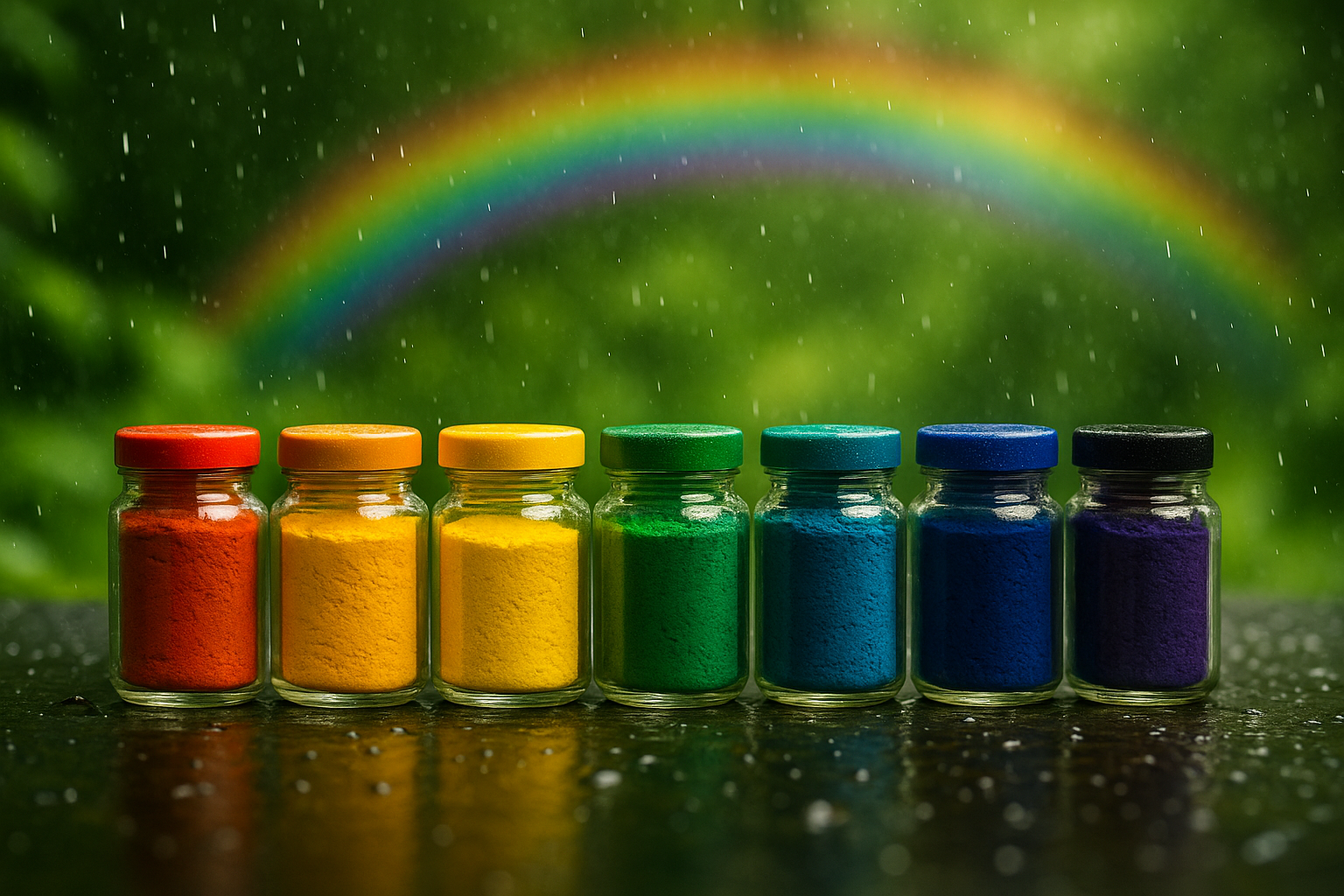
An ordinary morning in the Servus workshop. The melter warming up slowly, the light falling on the workbench, and the jars of dye – red, purple, green – ready to come into play. Nothing spectacular, nothing theatrical. Just our rhythm: patience, measuring, testing. That’s where everything starts.
For anyone who works with candles, colours aren’t just "pretty". They’re a statement. They say whether you’re patient, whether you’ve mastered the material, whether you really know how to work. And one of the most common challenges, which we see every day in messages from makers, is a simple one:
"Why doesn’t my colour come out the way it should?"
Today we answer directly, with the real procedures we use in the workshop, on every batch.
I’m Sînziana, and I’ve been working with candles for over 12 years. What have I learned? That beautiful shades aren’t an accident. You get them with patience, testing and a few clear rules. Today I’ll tell you all of them, directly, just as they are.
At Servus, dyes have always been a challenge. In the same batch you can have superb candles and pale ones. Why? Because pigments behave differently in wax, depending on temperature, quantity and the type of fragrance used. Let’s look at the most common mistakes – and, more importantly, how to fix them now, without wasting material.
1. You use too much dye
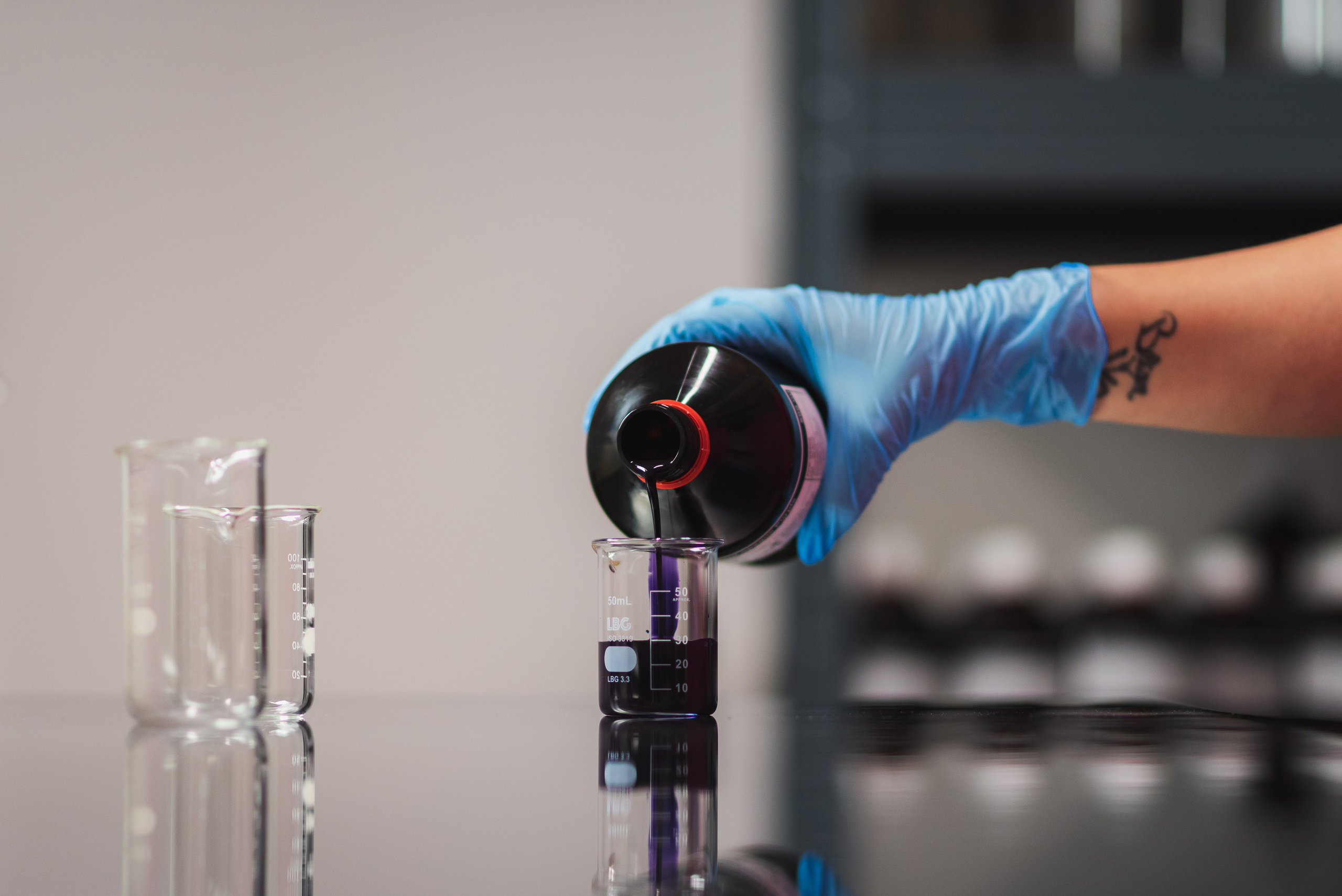 Many makers think more means more intense. Unfortunately, it doesn’t. Too much dye = a candle that doesn’t burn properly. You get smoke, an unstable flame and deposits on the walls.
How to fix it:
- Set a realistic dose: 0.1–0.5% liquid / 0.1–0.2% powder / 1–1.5 g/kg Bekro granules
- Always start low
- Increase gradually, not all at once
2. You add the dye at the wrong temperature
If the wax is too cold, the pigment doesn’t dissolve completely. If it’s too hot, the colour turns too light.
How to fix it:
- Add the dye at the temperature on its sheet: liquid at ~70 °C, powder at 60–65 °C, Bekro granules at 85–95 °C
- Stir for 20–30 seconds with wide movements
- The fragrance goes in after the colour has settled
3. The colour in the melter doesn’t match the finished candle
In the Servus workshop we use a simple but extremely precise ritual: the Drop Test on a White Surface.
We put a few drops of dye in the melter, stir, then with a metal rod we take out a single drop of coloured wax. We let it fall on a white surface and wait 30 seconds for it to set.
What the test tells us:
- If the drop is too pale → we add one more drop of dye and repeat
- If it’s too intense → we add clean wax and start again
Servus note: the finished candle is always more intense than the drop. The finished product is solid, not a thin film. That’s why the test shows the direction of the colour, not the final intensity – and it saves you from "washed-out" candles or ones that are far too dark.
4. The fragrance changes your colour
Fragrances with heavy notes (vanilla, caramel, wood, spices) can "eat" the pigment.
How to fix it:
- Add the fragrance before the final colour test
- Adjust with 1–2 extra drops
- Use dyes that are stable with heat and fragrance (the Servus raw materials range)
5. You use dyes that aren’t suitable for candles
Not every dye works in candles. Some separate, others stain or burn dirty.
How to fix it:
- Choose dyes made for candles (liquid, powder, solid)
- Check the dispersion with the Drop Test
- Avoid testing straight on large batches
The raw materials we use and why we choose them
At Servus, the dyes we list are exactly the ones we work with in the workshop, not cheap alternatives or ones of unknown origin.
Liquid dyes – French Color & Fragrance International GmbH
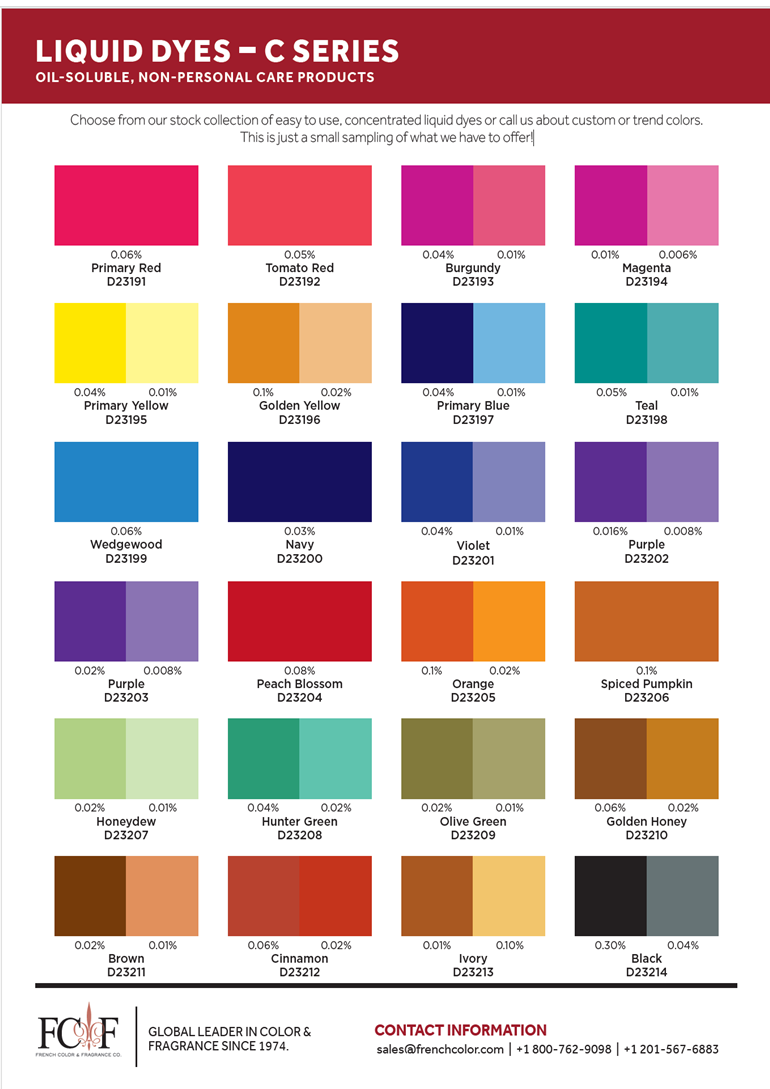 We work directly with the FCF factory, with no intermediaries. We have access to new products, research, new formulas, technical reports and professional presentations. Every batch is tested for real in the workshop, and only the products that pass the burn, dispersion and fragrance-stability tests go on sale.
FCF also confirms in its public analyses that candles are "extremely complex systems", where colour and fragrance interact all the time. Reference here: https://blog.frenchcolor.com/fcf-insights
Example product: Red liquid dye – FCF
Solid dyes – Bekro
For solid dyes we work with Bekro, a global leader in premium pigmentation, known for stability, intensity and compatibility with natural waxes.
Example product: Intense Red solid dye – Bekro
Servus conclusion
Working with dyes can sometimes seem capricious – too pale, too intense, unstable or affected by the fragrance. But as in any craft process, once you know the rules, colours become predictable.
At Servus, this is what we do every day: we test, adjust, check. No rush, no shortcuts. Just real practice in the workshop and products we’ve used before selling them.
If you want to work with dyes you can rely on, the same ones we use in Servus production, you’ll find them here – already tested, already checked, ready for your batches.
You do the work. We support you.