
 EN
EN  Romana
 Magyar
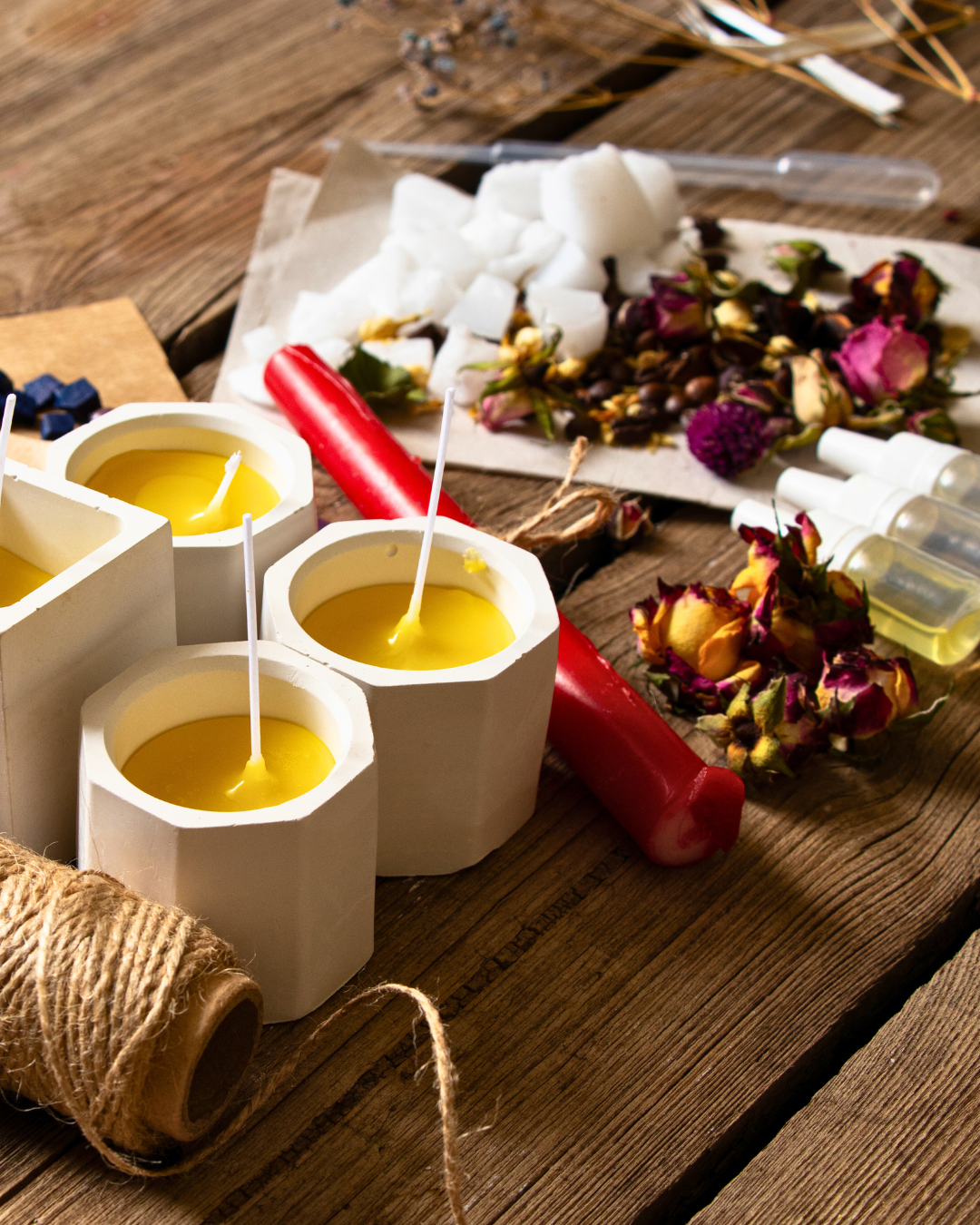
In the workshop, the light always falls differently. Sometimes gently, sometimes in a hurry. Sometimes it stops right on a candle tested overnight, where the wax has settled quietly and the wick has burned straight, properly, exactly as it should. Other times, the same light reveals a crack, a stain, a wick that gave up too early.
The truth is that here, in the workshop, every small detail speaks.
I’m Sînziana…
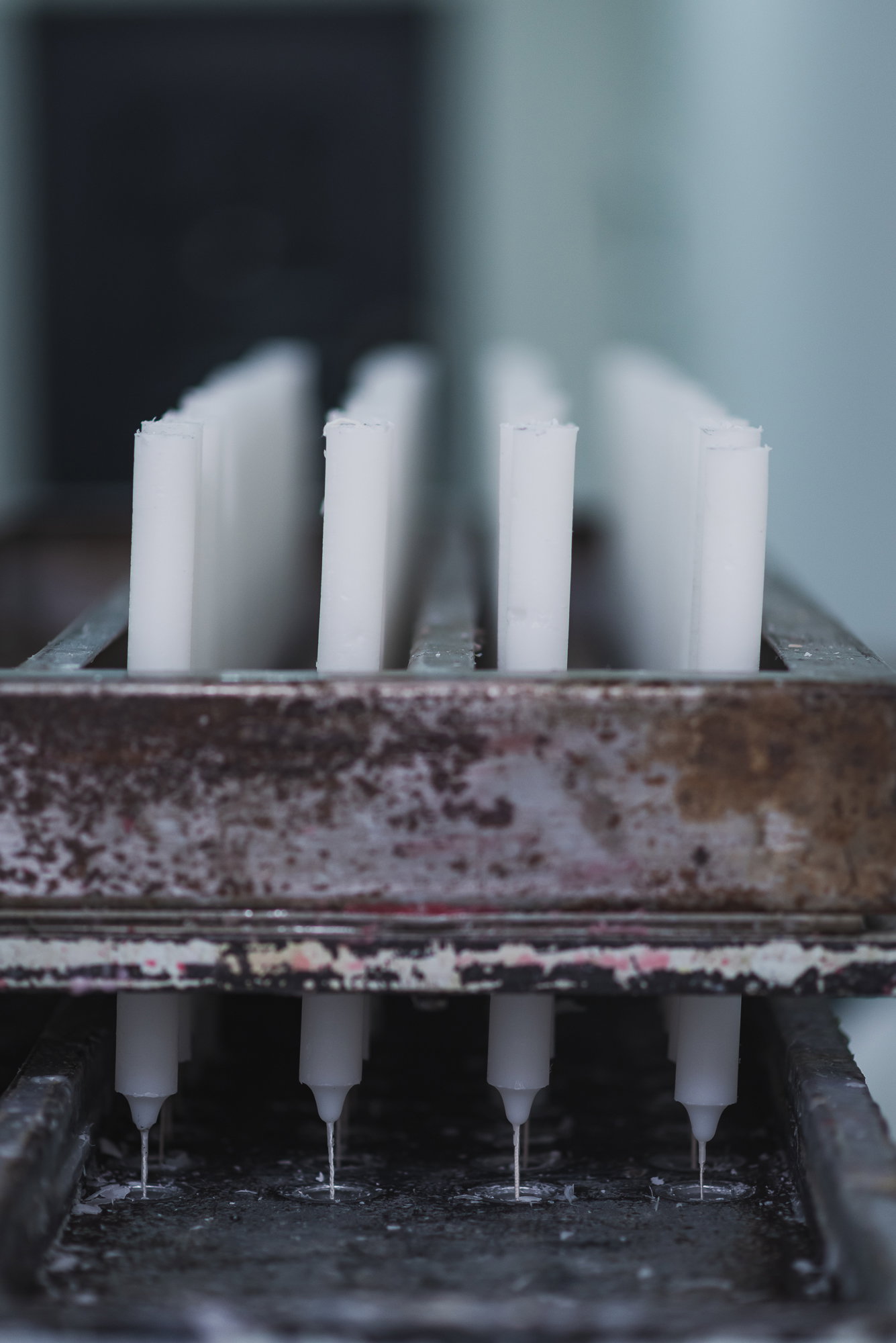 …and I’m writing to you from the place where I learned that candles aren’t just objects. They’re work, patience, test after test and a healthy dose of stubbornness.
I started Servus without a manual, without recipes, with just one simple wish:
to make things I can truly believe in.
And from the very beginning, that meant understanding what lies behind a good candle: the raw material.
Why we came to full transparency
For years we kept our tests to ourselves — notebooks full of notes, photos, candles that worked and candles that didn’t, failed blends, recipes started over, wicks changed three times in a single morning.
But in the last year something happened:
makers started asking us more. Looking for the truth, not just a product.
And that’s when I understood we had to let go of everything we’d learned.
Not through complicated manuals.
But through stories.
Through the truth.
Five years of tests, four countries, hundreds of candles
Few people know this: before we sold the first wick or the first wax in our shop, we tested almost everything there is in the industry.
Italy. Germany. France. The USA.
Manufacturers specialising in plant waxes. Small factories and big factories.
Samples, boxes, parcels, wicks with dozens of series and codes.
There were times when the workshop was full of trays of candles tested side by side — some perfect, others… not quite. But all of them taught us something.
And then came the moment that changed the whole way I look at wicks
After five years of tests, samples, boxes, comparisons and good and not-so-good candles, there was one day that has stayed very clear in my mind.
I had six types of wick on the table, from different manufacturers.
They all promised the same thing: stability, a beautiful flame, predictable behaviour.
I poured them in the same recipe.
The same wax.
The same fragrance percentage.
The same temperature.
And I let the candles burn for a few hours, in silence.
And here something happened that you don’t see on a technical data sheet:
- one made a big flame at first and went out when it was relit
- one burned well for an hour and then the wick swelled
- one tunnelled halfway down
- one was perfect on the first burn and a disaster on the second
- one mushroomed as if I’d put diesel in it, not fragrance
- and one… burned quietly, cleanly, calmly, as if all the others didn’t even exist
That’s when I said to myself:
“That’s it. This is the one I want.”
Not because it came from Germany.
Not because it had a name.
Not because a table recommended it.
But because in my workshop, in my real recipes, with my own hands, it did exactly what it was supposed to do.
That’s how we came to the manufacturer we work with on wicks today.
I didn’t choose it on paper.
I chose it by the burn.
And if I’m to tell you the whole truth, maker to maker
Technical data sheets are useful.
But they don’t tell the whole story.
No manufacturer can guarantee how the wick will behave in your recipe.
Only you and your real test can.
And yes, we’ve analysed dozens of series and hundreds of combinations, and read everything there is to read about wicks — but that day, with the six candles lined up on the table, did more than all the data sheets put together.
Because that’s when I saw with my own eyes what a good wick means.
And if I’m to leave you just one rule, it’s this
Don’t choose the wick by its promises.
Choose it by how it behaves for you, in your workshop.
And if that seems hard — you’re not alone.
We’ve done hundreds of tests so that we only put in our shop what deserves to be there.
The Servus promise
From today on, everything we know goes on the blog:
- guides explained simply
- why we prefer certain waxes
- how we choose wicks
- what problems come up with certain combinations
- what we use ourselves in the production of our own candles
Not for traffic.
Not for SEO.
But because the truth from the workshop deserves to be told.
And because makers only grow when someone has the courage to open the door and show light + mistake + result.
The magic starts here
Not in suppliers.
Not in tables.
Not in lists of codes.
The magic starts here, in the workshop.
In the candles that burn properly.
In the ones that don’t, and make us start all over again.
In the evenings when we test once more because “this wick seems to be behaving differently”.
In the conversations with makers who send us photos, questions, solutions.
The truth is simple:
there are no good candles without materials you can trust.
And that’s what we want to give you.
Instead of an ending: an invitation
If you have questions, doubts, failed tests or things you’re curious about – write to us on WhatsApp at +40 726 162 810 (we answer in English).
We always answer, honestly, the way we’d answer a friend from the workshop.
The Servus workshop is open:
with light, with tests and with the truth.
Let’s build together a community of makers who work with confidence, not with guesswork.
I’m here. The workshop is here. The light is here.