 EN
EN  Romana
 Magyar
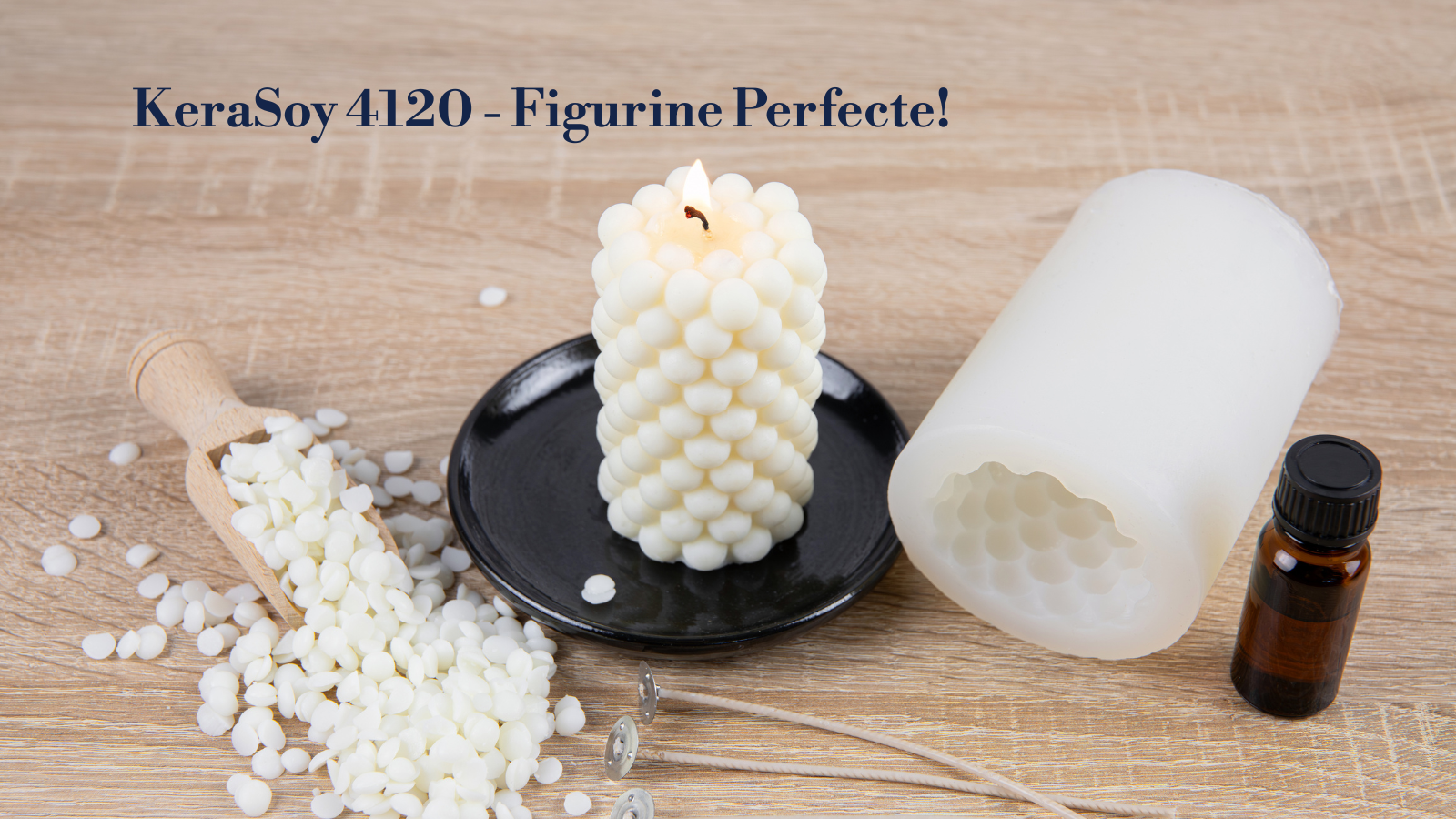
In the Servus workshop, figurines always have the last word.
You can heat the wax perfectly, have a flawless mould, good fragrances and a deep colour… but the moment you open the mould and try to take out that little angel with fine wings, everything is decided in three seconds. Three seconds that can mean "wow" or "it broke again…".
On a day of white winter light, we poured three test angels. The same mould, the same wax, the same temperature. The first came out perfect. The second lost the tip of a wing. The third stayed stuck inside, as if it didn’t want to leave. We looked at the mould and laughed: "Today the figurines beat us." And sometimes it’s good to be beaten: it makes you think, it puts you to work.
I’m Sînziana, and at Servus we test every material exactly the way you do: in the workshop, with our hands on the moulds and the warm candles in front of us.
Before we put a wax in the shop, we put it through dozens of trials, not just through data sheets. And yes, KeraSoy 4120 comes from a serious supplier, with clear standards and real certifications. If you want to see the official documents, their transparency says it all: https://kerax.com/pages/certifications
But beyond the figures and the audits, the real story starts the moment you pour a figurine with fine details and pray the wings stay whole.
What Kerax says – in short and in plain words
From the official technical data sheets (TDS – KeraSoy Pillar 4120), we have a few key values:
- melting: up to 90 °C, only briefly
- congealing: 43–52 °C (typically 47 °C)
- low viscosity → flows nicely into moulds
- very light colour
- faint smell → ideal for fragrance
- a formula designed for pillar candles (sculptural candles, not containers)
All of this means one thing: it’s a good wax for figurines, if you treat it gently.
But what does the data sheet NOT tell you?
The moment the figurine decides whether it comes out or breaks.
The data sheet doesn’t tell you what a broken little wing looks like. It doesn’t tell you how a mould that’s cold on the inside feels. It doesn’t tell you how a fine stress forms at the edge when you pour too cold. It doesn’t tell you that a fragrance that’s too heavy can make the details fragile. It doesn’t tell you that a mould that hasn’t been warmed "bites" into the figure.
The workshop told us all of this, not kerax.com.
And that’s why we’re telling you too.
What really works with small pieces / figurines – Servus test
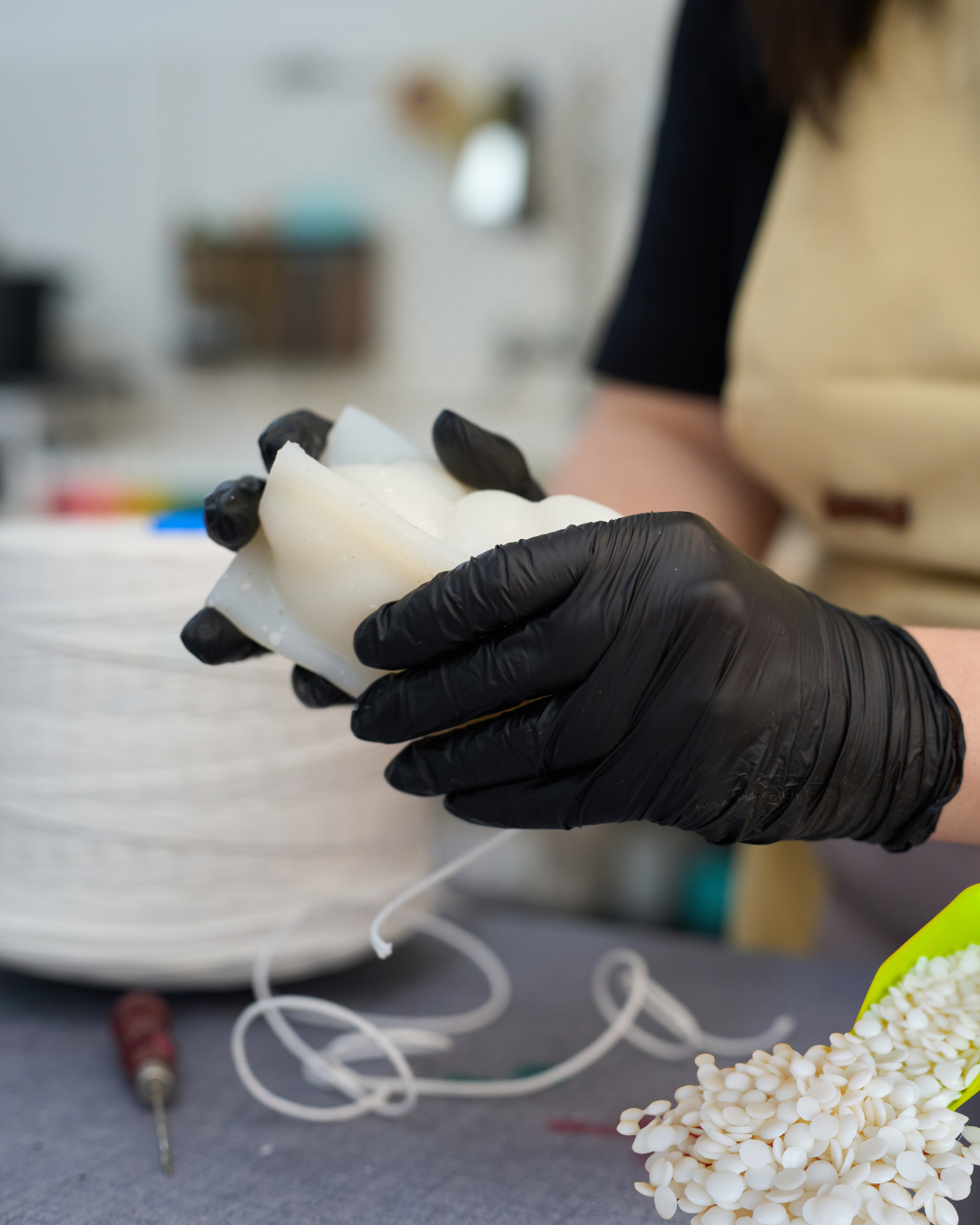
1. Preheat the mould to 45–50 °C
Not hot. Not cold. Just warm, like the palm of a hand. If it’s cold → the wax contracts suddenly → fragility → broken wings.
2. Melt at 80–85 °C
Cleaner, more fluid, more stable.
3. Add the fragrance at 65–68 °C
Heavy fragrances (vanilla, cinnamon, gourmand notes) = risk of fragility → stay at 5–6% (the Kerax sheet allows 5–10%).
4. Pour into the mould at 58–62 °C → the "golden zone"
This is where figurines come out supple, flexible, without cracks.
5. Don’t pour in a hurry
Pouring fast → internal waves → stresses → breaks when you take it out.
6. Let it release ON ITS OWN
Don’t yank it. Don’t pull suddenly. Open the silicone slowly and let the air get in around the edges.
7. Avoid very dark dyes at high concentrations
Too much black = more fragile wings and tips.
The story you don’t forget
Our most successful figurine in 4120 is a 6 cm angel. Not because it was perfect, but because it came out whole after 5 failures.
On the day it came out right, we didn’t do anything "special": we were just careful, calm, present.
And we understood something no technical table will ever tell you:
KeraSoy 4120 doesn’t like haste. Give it time, give it warmth, and it gives you the cleanest details.
CTA – SERVUS, PRACTICAL, HUMAN
If you have a figurine that broke, send us a photo on WhatsApp.
We’ll tell you exactly what happened and how to fix it at your next pour.
Have a figurine that broke? Send us a photo on WhatsApp: +40 726 162 810 (we answer in English).
The wax used in the test (KeraSoy 4120, for moulds / figurines): https://www.lumanariservus.ro/en/pillar-wax
Servus. I’m Sînziana. And I’m here to help you get the wings out of the mould whole.