
 EN
EN  Romana
 Magyar
Wick Calculator for Container, Pillar and Rolled Candles
Which wick goes in your candle
When a candle tunnels or the wick goes out after a while, the first thing to check is whether the wick matches the candle's width and the wax. Tell us what you're pouring, in which wax and how wide the candle is. We show you the wick to start from, where the figure comes from and how to check it on the first burn.
1 Your candle
2 The wick to start from
3 How to check it
What the calculator doesn't do


FAQ
What does the wick calculator do?
You choose what you’re pouring (in a glass, in a mould or rolled from honeycomb sheets), the wax and the diameter. The calculator shows you which of our wicks to start from, and why. It tells you which size to take if the test comes out too weak or too strong, and how many wicks, packs or reels you need for the number of candles you’re making.
Where do the figures come from?
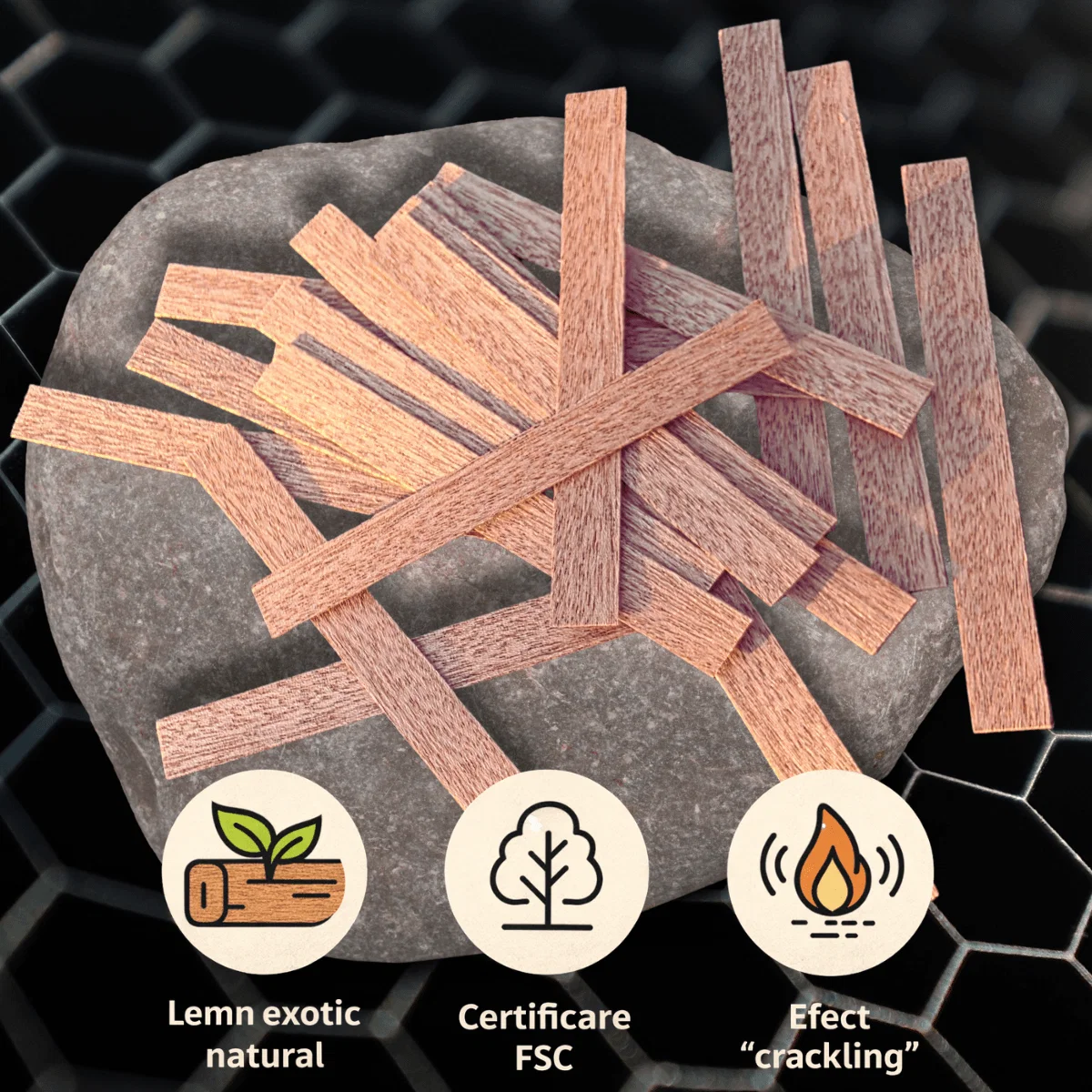
From three places, and the calculator names each one next to the recommendation. For the wooden wick and for the special wick for rolled candles, we measured the ranges ourselves, in burn tests. For the special wick for poured beeswax candles, the range is from the manufacturer’s data sheet. For the braided cotton wick for moulds and the waxed wick for glasses, the ranges are a guide, from our workshop and our wick line: you confirm them in a test. Where we don’t have the figure, we don’t make one up.
Why does it give me one size up for soy wax?
Soft plant waxes narrow the melt pool compared with paraffin, so at the same diameter they need a stronger wick. For soy, coconut and the other soft plant waxes, the calculator starts one size above the one for paraffin. Rapeseed wax is an exception: according to the Schreiber catalogue, our waxed wick for glasses isn’t made for it, so there the calculator doesn’t give a size. Your test confirms whether you need the size up.
How do I choose the height of the waxed wick with tab?
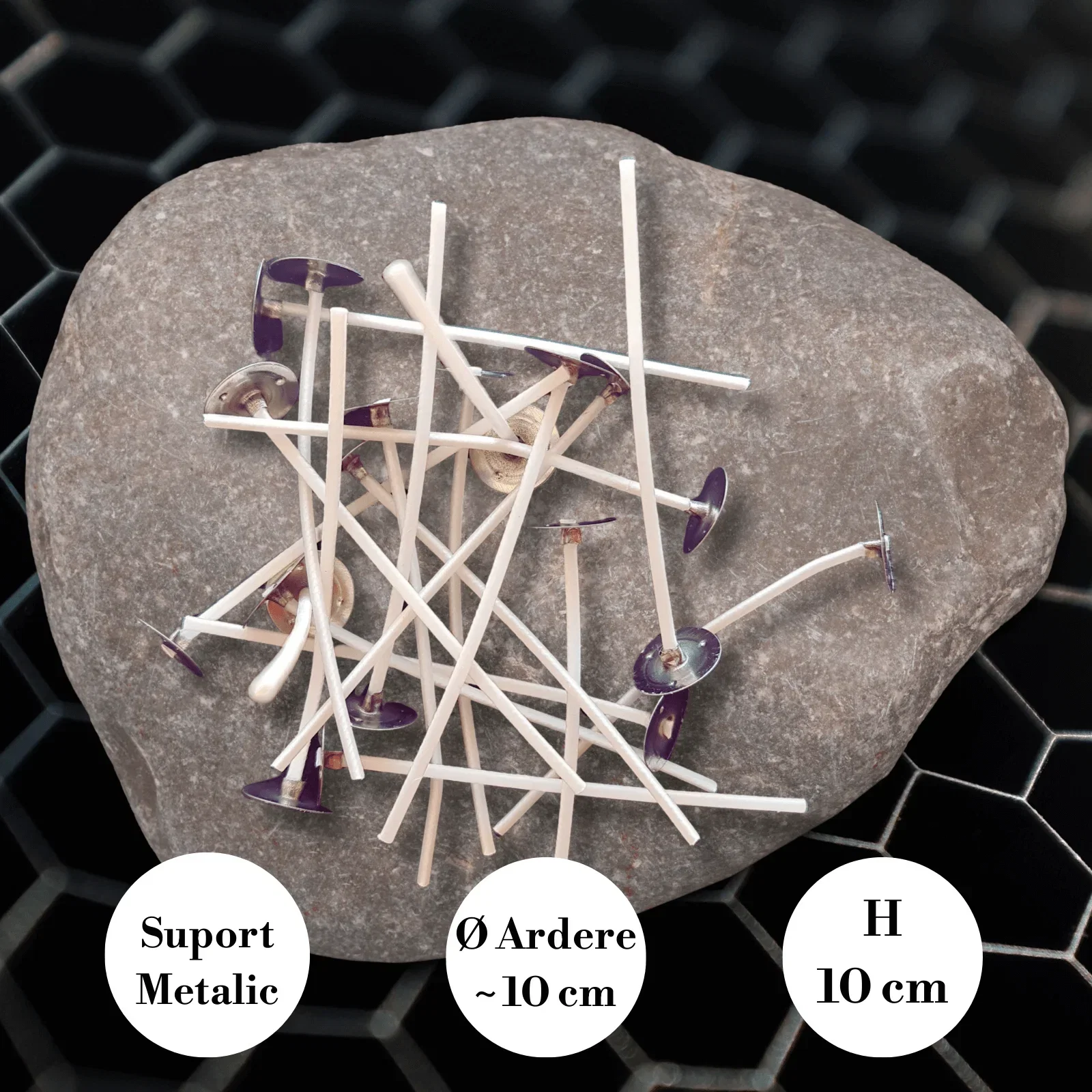
The waxed wick has two figures: the burn diameter and the height. You choose the diameter at about the inside diameter of the glass, and the height by how deep the glass is. The calculator takes the shortest wick that reaches the rim of the glass and tells you if the glass is taller than the longest wick at that diameter.
Can I make up for a wick that’s too big with more fragrance?
No. If the melt pool goes deeper than 0.5 cm or the glass gets hot, the wick burns off the fragrance before you can smell it. More fragrance in an overheated recipe makes the result worse. Go down one wick size.
What do I do when the calculator doesn’t give me a wick?
It means your candle is outside the ranges we have measured or the manufacturer gives: a glass wider than 10 cm, a moulded candle over 9 cm, a wooden wick in coconut wax. There, we won’t give you a made-up figure. Message us on WhatsApp with your recipe, the diameter and what you saw when it burned, and we’ll look into it together.
Do I still need to test if I take the recommended wick?
Yes. The calculator gives you the starting point. Fragrance, dye and the container change the burn, so every new recipe starts with a trial: for a glass, the 2-hour test through clear glass; for a mould, the melt pool after 20–30 minutes; for a rolled candle, a trial piece burned on your final recipe.