
 EN
EN  Romana
 Magyar
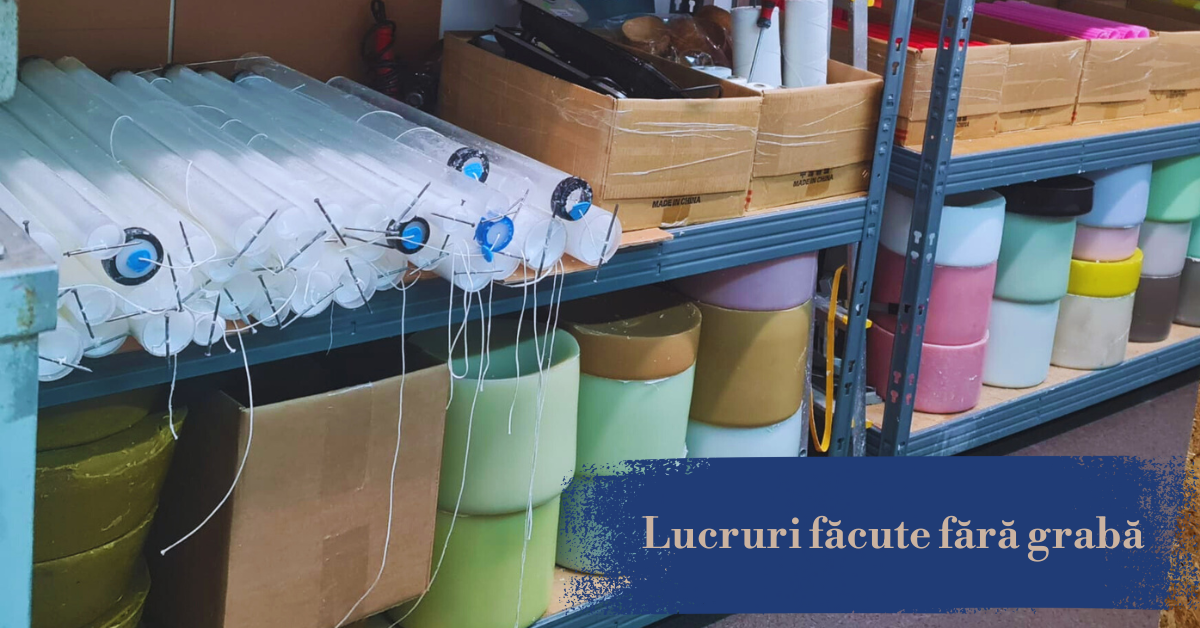
About the Sunday before Christmas, when the workshop breathes
I’m Sînziana.
And today is Sunday, a few days before Christmas.
The Christmas orders have gone out. All of them. The last parcels left through the door checked twice, not out of perfectionism, but out of a deep need for peace of mind. I know from experience that peace of mind doesn’t come when you finish quickly, but when you know for sure that you’ve done things the way they should be done.
Between Christmas and January a rare time opens up. A time that doesn’t appear in production plans and isn’t learned on courses. A time you recognise at once if you work with your hands. It’s the period when the workshop doesn’t stop, but breathes.
Not because we’ve stopped working.
But because we’re no longer working under pressure.
The workshop after the peak
This Sunday I walk into the workshop differently. I no longer carry in my head that long list of things that “have to be done now”. The light falls on the workbenches without my calling it. The melting pots are clean, but they carry the marks of the last few weeks. On the rim of one, a thin film of hardened wax has stayed behind. I don’t clean it off straight away. Some marks tell the truth better than spotless surfaces.
After the peak of the season, the workshop doesn’t look pretty.
It looks honest.
There are moulds that haven’t been used, because there was no room for them. There are candles that never made it to packing, not because they were wrong, but because they weren’t exactly as they should have been. There are wicks cut correctly, left on the table, unused. Nothing is lost. Everything says something.
To people on the outside, this period looks empty.
To us, it’s one of the fullest.
When we no longer make things to ship them
On the Sunday before Christmas we no longer make things to ship them.
We make things to understand.
This is the moment when the materials start to speak more clearly. The wax shows where it was forced. The wick tells you where it was chosen by reflex. The surface of a candle tells you exactly how rushed you were. There are no more excuses, because there’s no more deadline.
This is where an uncomfortable truth comes out: most defects don’t happen because we don’t know what we’re doing, but because we know very well and choose, out of tiredness, to hurry.
The maker’s tiredness after the season
Once the pressure is gone, the body starts to speak.
The hands ache not from the work, but from the tension. The back asks for attention, not for a break. And the tiredness is no longer the kind that sends you peacefully to sleep, but a built-up one, which catches up with you only when you stop.
I’ve learned that a maker’s tiredness doesn’t come from volume, but from carrying on without a breath. From weeks in which every day looks like the one before, from decisions made too quickly, from a “just a little more” repeated too often.
Emotionally, a strange emptiness appears. After weeks in which you were needed, sought out, pressed, the quiet can be frightening. The phone rings less often. The emails stop. And a question is left that never comes up in the season: are you still all right with what you do?
This is where a lot of things break.
Or get mended.
Servus secret
Servus secret
We made our biggest mistakes not when we didn’t know enough, but when we were too tired to still have patience.
In the workshop I’ve seen candles that were technically correct, but lifeless. Processes followed “almost perfectly”. Decisions made by reflex, not with attention. Each time, the problem wasn’t a lack of knowledge, but a lack of energy.
That’s why, for us, the period between Christmas and January isn’t negotiable. It’s the moment when we rebuild not just products, but the capacity to work well.
Mending
Between Christmas and January, we mend.
Not in a hurry. Not to tick boxes. But to go back to the things which, in the season, are kept more out of discipline than out of attention.
We redo old tests without the clock beside us. We adjust temperatures that, at the peak of the season, we kept to “almost” perfectly. Every type of wax has its own rhythm, and when you’re tired, the first thing you lose is patience. Not because you no longer know what you have to do, but because you no longer have the energy to wait.
For those who feel the need to go back to basics, we’ve put together, from real workshop experience, a guide written exactly for the moments when you’re no longer in a hurry. It isn’t about rules, but about respect for the material:
Correct temperatures for each type of wax – Servus Guide 2025
We clean our tools better than we do in the season. We move things around the workshop, not for efficiency, but for clarity. And we allow ourselves, perhaps the hardest thing of all, not to produce every day.
The guilt of the pause
For many makers, this period comes with guilt. The guilt of no longer producing. That others are still selling. That you allow yourself to breathe. But the truth is simple and we won’t sweeten it: if you don’t stop here, you’ll pay later. With spoilt material. With a tired body. With lost joy.
A pause isn’t the opposite of work.
It’s part of it.
In the end – what stays over the years
Real craft isn’t built in the middle of the season.
It’s built here. Afterwards. When no one is watching any more. When there’s nothing left to ship. When it’s just you, the material and the way you choose to work.
In three years, in five years, someone will read this article on another Sunday in December. The world will be just as hurried. Christmas will go by just as fast. And between Christmas and January this rare space will be there again, in which it’s all right to slow down.
If you’re there, in that moment, and you feel you need to hear that you don’t have to prove anything, that it’s enough to be present and attentive to what you do, I once wrote a text from exactly this place. A workshop manifesto, born of good tiredness, of doubt and of sincerity:
Go ahead, start. I am here. – Servus Manifesto
Not as a push.
But as a promise.
I’m Sînziana.
And at Servus, the Sunday before Christmas isn’t a pause.
It’s the foundation.