 EN
EN  Romana
 Magyar
In the workshop, the light always falls on the melters before it falls on the candles
Mornings in the workshop have a quiet of their own. Not an empty quiet, but one that breathes warmth, along with the metal and the soft steam rising slowly from the double-walled melters. Before the wicks, before the fragrances, before the moulds and the orders, everything starts here – in that zone of steady warmth that is the first thing to light up the workshop.
Those who come in for the first time see tables, tools, shelves.
Those who come a second time notice the order.
Those who come back a third time begin to feel the rhythm.
But those who work here every day know it well:
everything starts with the warmth of the melters.
I’m Sînziana, and this is the most complete temperature guide I’ve ever written
A guide built from years of real tests, not theory. Hundreds of batches poured in cold winters and scorching summers. Professional double-walled melters, with thermal oil and stepped control. Temperatures measured with a probe directly in the wax, not in the air, not on the wall. Candles repaired, corrected, repeated, sometimes late into the night. Stories from the workshop, from those evenings when you’re searching for the perfect temperature.
And, most importantly, the experience of the people who work here day after day. People who feel the wax in their hands before they measure it in degrees.
This is not a guide made by the internet.
It’s a guide made in the workshop.
1. The story of the Servus melters – the foundation of correct heating
1.1 How professional double-walled melters work
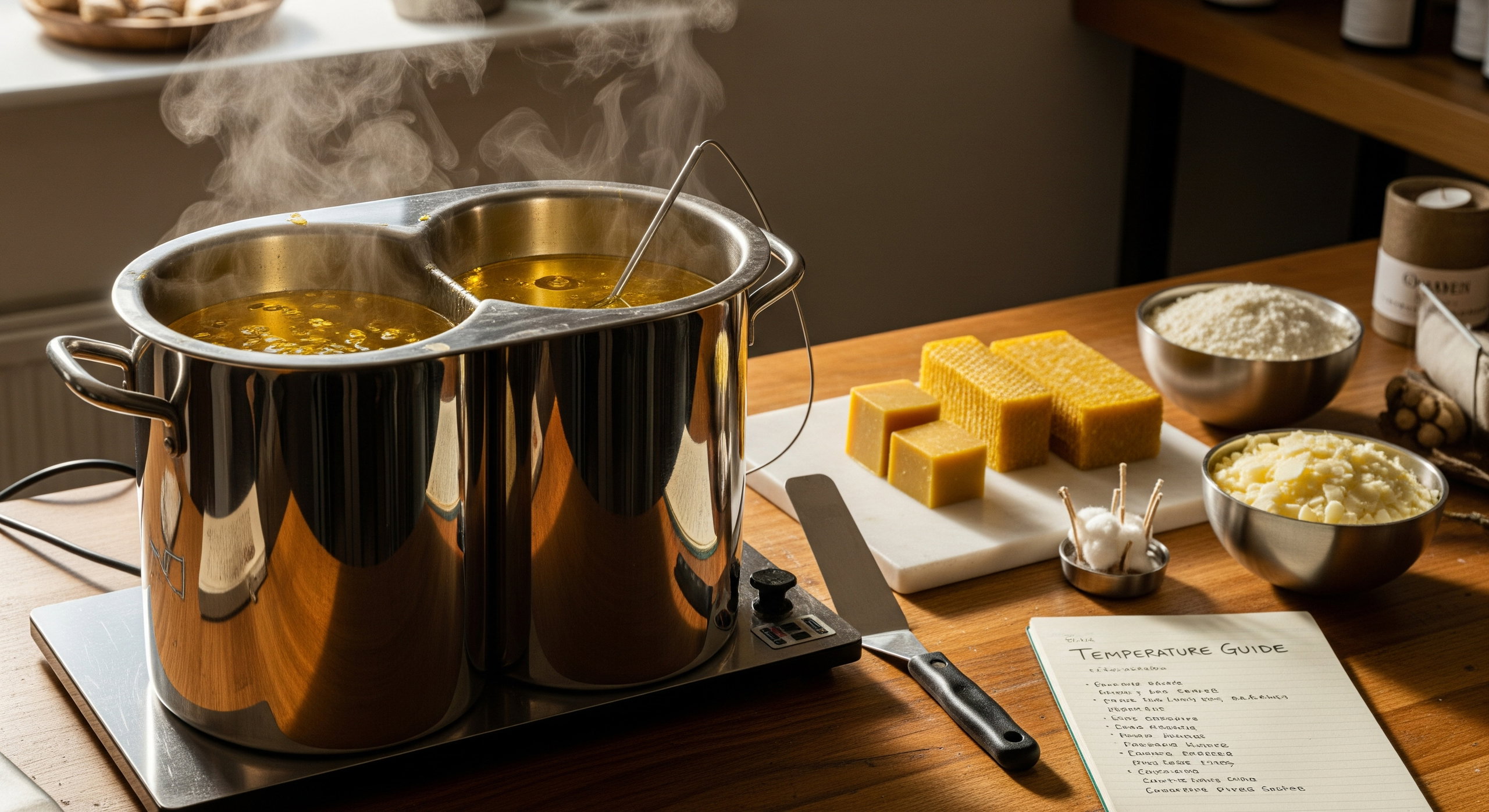
The Servus melters are designed for gentle, stable heating.
Here is the real mechanism, exactly:
- The electric heating elements heat the outer wall.
- The thermal oil between the walls takes up the heat and spreads it evenly.
- The thermostat switches the heating elements on and off in fine steps.
- The wax receives only indirect, steady heat.
- The probe placed directly in the wax shows the real temperature, not approximations.
This is the foundation of Servus quality.
2. Room temperature – the secret variable of successful candles
Wax doesn’t work only with its own internal temperature, but also with the air around it.
This becomes extremely visible in the workshop, in winter as well as in summer.
2.1 Winter – the room is not artificially heated
In winter, the room is heated only by the melters.
The result is two zones:
The warm zone – next to the melters
- stable pours
- moulds and containers warm up gradually
- the texture stays even
The cold zone – the rest of the room
- moulds draw heat out of the wax
- streaks, rough edges, cracks and graininess appear
- thin figurines can give way even if the temperature of the wax is perfect
Differences of 2–3°C can change everything.
2.2 Summer – ventilation + air conditioning
In summer, the room is ventilated and air-conditioned.
The containers aren’t cold and the fragrance settles properly, but:
- direct AC → a skin forms too early
- air currents → uneven cooling
- opening the doors → sudden changes
Summer needs attention too.
2.3 The Servus rule for the room
- 20–24°C in the pouring area
- no draughts
- moulds/containers acclimatise for 15–20 min next to the melter
- in winter → we pour close to the melters
The atmosphere is part of the recipe.
3. A Servus secret – the 5-minute settle
Once the wax reaches the ideal temperature, I don’t pour straight away.
I leave it for 5 minutes to settle.
During this time:
- the bubbles rise
- the temperature evens out
- the surface tension drops
- the wax becomes calm
It’s technical, but it’s also a ritual.
Just as my grandmother used to say:
“Let it settle for a little while.”
4. The correct temperatures for each type of wax – as we use them in the workshop
4.1 Soy wax – container
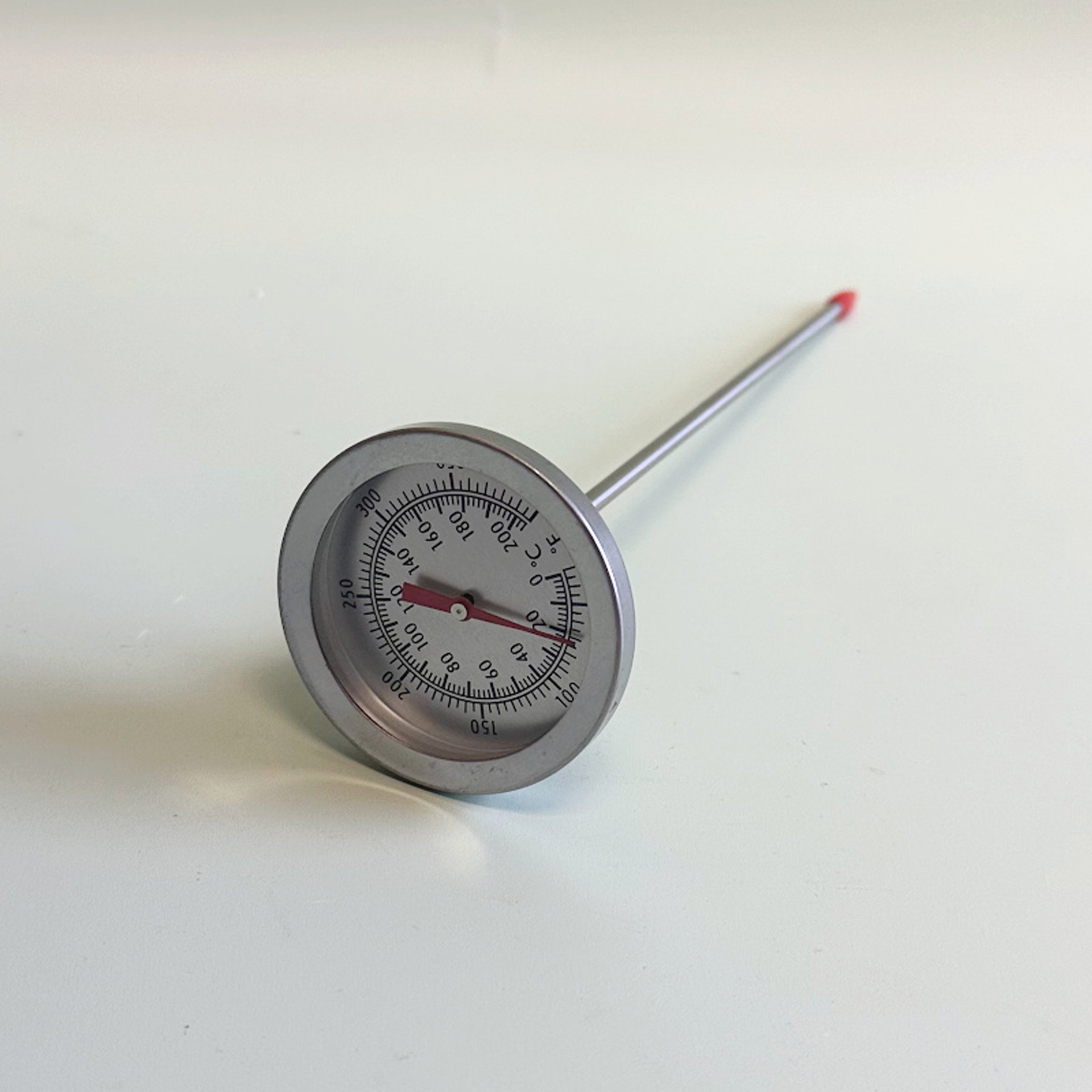
- melting: 70–75°C
- fragrance: 60–65°C
- pouring: 45–55°C
Specific defects
- below 45°C → graininess, “orange peel”
- too hot → crater, “wet” rings
- cold fragrance → separation
- cold room → matte surface
4.2 Soy wax – pillar / figurines
- melting: 70–80°C
- pouring: 55–65°C
- thin figurines: 63–66°C
- warm moulds: 20–25°C
Specific defects
- cold moulds → vertical streaks
- hot → internal voids
- cold → cracks
- differences in room temperature → deformation
https://www.lumanariservus.ro/en/blog/kerasoy-4120-figurines-without-breaking.html
4.3 Beeswax
- melting: 70–75°C
- pouring: 62–68°C
Defects
- below 60°C → streaks
- hot → yellowing
- pouring too fast → trapped bubbles
4.4 Coconut wax
- melting: 70–75°C
- pouring: ~65°C
Defects
- below 52°C → matte surface
- hot → shrinkage
- cold room → “frozen” edges
4.5 Palm wax
- melting: 85–95°C
- pouring: 70–80°C
Defects
- too cold → small crystals
- too hot → harsh crystals
- fast cooling → incomplete pattern
4.6 Paraffin – container + pillar
- container: 70–75°C / 60–68°C
- pillar: 82–90°C / 70–78°C
Defects
- cold → lines
- hot → shrinkage
- cold room → cracks
4.7 Gel wax – the Servus procedure
- melting: 90–95°C
- fragrance: 85–90°C, max 3–5%, gel-compatible only
- colouring: Servus liquid colourants
- pouring: 85–90°C
- cooling: calm, no draughts
Defects
- cold → bubbles, cloudiness
- hot → loss of clarity
- unsuitable fragrance → opaque
- cold vessel → internal streaks
5. The official Servus temperature table 2025
| Wax type | Melting | Pouring | Notes |
|---|---|---|---|
| Soy container | 70–75°C | 45–55°C | Fragrance 60–65°C |
| Soy pillar | 70–80°C | 55–65°C | Warm moulds |
| Thin figurines | 70–80°C | 63–66°C | 5-minute settle |
| Beeswax | 70–75°C | 62–68°C | Avoid below 60°C |
| Coconut | 70–75°C | ~65°C | Below 52°C = matte surface |
| Palm | 85–95°C | 70–80°C | Crystals depend on temperature |
| Gel | 90–95°C | 85–90°C | Compatible fragrance only |
| Paraffin container | 70–75°C | 60–68°C | Smooth surfaces |
| Paraffin pillar | 82–90°C | 70–78°C | Increased hardness |
Closing – The light you make with your own hands
Candles aren’t just wax and a wick. They’re moments. They’re feelings left in someone’s care. They’re quiet evenings, they’re memories that don’t yet know they’ll become memories. When you pour a candle, you put something into it that isn’t measured in degrees: you put in time, patience, attention.
When the wax melts in the double-walled melters, the story begins. When you let it settle for 5 minutes, you give it a soul. When you pour it with care, you give it shape. When someone lights it, you give it meaning.
If your candles turn out more beautiful after this guide, then a part of our workshop – warm, attentive, patient – has reached you. And for Servus, that’s all that matters.
If you work with several types of wax in the same batch
The right temperature is the first step. The second is the order in which you put the materials into the melter – especially when you work with blends or mixed recipes with two or three different waxes.
We wrote about this separately, from the same workshop:
Wax melting mistakes: why it takes 5 hours to melt a batch and how to choose the right order
The waxes we work with in the workshop
If you want to work with the same waxes that we test and use every day, you’ll find them here:
Wax for moulds – Pillar Wax https://www.lumanariservus.ro/en/pillar-wax
Wax for containers – Container Wax https://www.lumanariservus.ro/en/container-wax
Questions from the workshop?
If something doesn’t turn out the way it should – the temperature seems right, but the batch still isn’t good – write to us directly. We’ll answer with what we know from practice, not from theory.
WhatsApp or phone: +40 726 162 810 (we answer in English)
What we know, we’ve tested. What we don’t know, we say so.
Servus