 EN
EN  Romana
 Magyar

You opened a new box of wax, poured your usual recipe, and the next day you found the candles full of bubbles, cracks or with a changed texture?
The data sheet is the same. The supplier is the same. The packaging is identical.
What changed?
I’m Sînziana.
The short answer is that maybe you didn’t get the recipe wrong, you ignored the batch variable. A technical data sheet gives you a safe range, not an absolute guarantee of how the wax will behave in your workshop. When you work with temperature-sensitive materials, the difference between a successful batch and a failed one isn’t on the label, it’s in recalibrating the process.
Why a new batch can throw an old recipe off
On paper, the material is identical.
In the reality of the melting pot, the behaviour of the wax can be influenced by micro-variables you don’t fully control: the source raw material from that specific production cycle, the transport conditions, storage, swings in humidity or the actual temperature in the workshop.
When you change the batch, the way the wax works can change quietly too: heat transfer, shrinkage, adhesion to the container, release from the mould or the way the wax takes the fragrance.
If you mechanically apply the same old temperatures to a batch that needs a small adjustment, the chain reaction can show up straight away: bubbles, cracks, a porous surface, a changed colour, a different burn or a final batch you can’t sell.
Diagnostic table: how to isolate the problem with a new batch
If the candle doesn’t turn out, you don’t need 20 ideas thrown out at random. You need a strict order for checking the variables.
| What you see in the finished product | What you check first | What you never do |
|---|---|---|
| Surface with spots, bubbles or pinholes | The melting temperature, the pouring speed, the cooling environment and the wax batch | You don’t change the wax, the wick and the fragrance all at once in the next test |
| Changed colour or an oxidised smell | Too high a temperature in the melting pot or prolonged exposure to heat | You don’t raise the working temperature without a small test first |
| Cracks or warping when unmoulding | Cooling too fast, a cold mould or thermal shock | You don’t put the moulds in the fridge to speed up setting |
| A different burn, tunnelling or smoke | The thickness of the wick, its position, the fragrance percentage and the melt pool | You don’t change the wick without clearly checking the depth of the melt pool |
| The old recipe stops working after opening a new box | New batch versus previous batch, in the same recipe and the same conditions | Don’t start a large production run before a side-by-side test |
Why we know these rules matter
In the Servus workshop, we’ve seen what happens when you rely only on the label, not on a test.
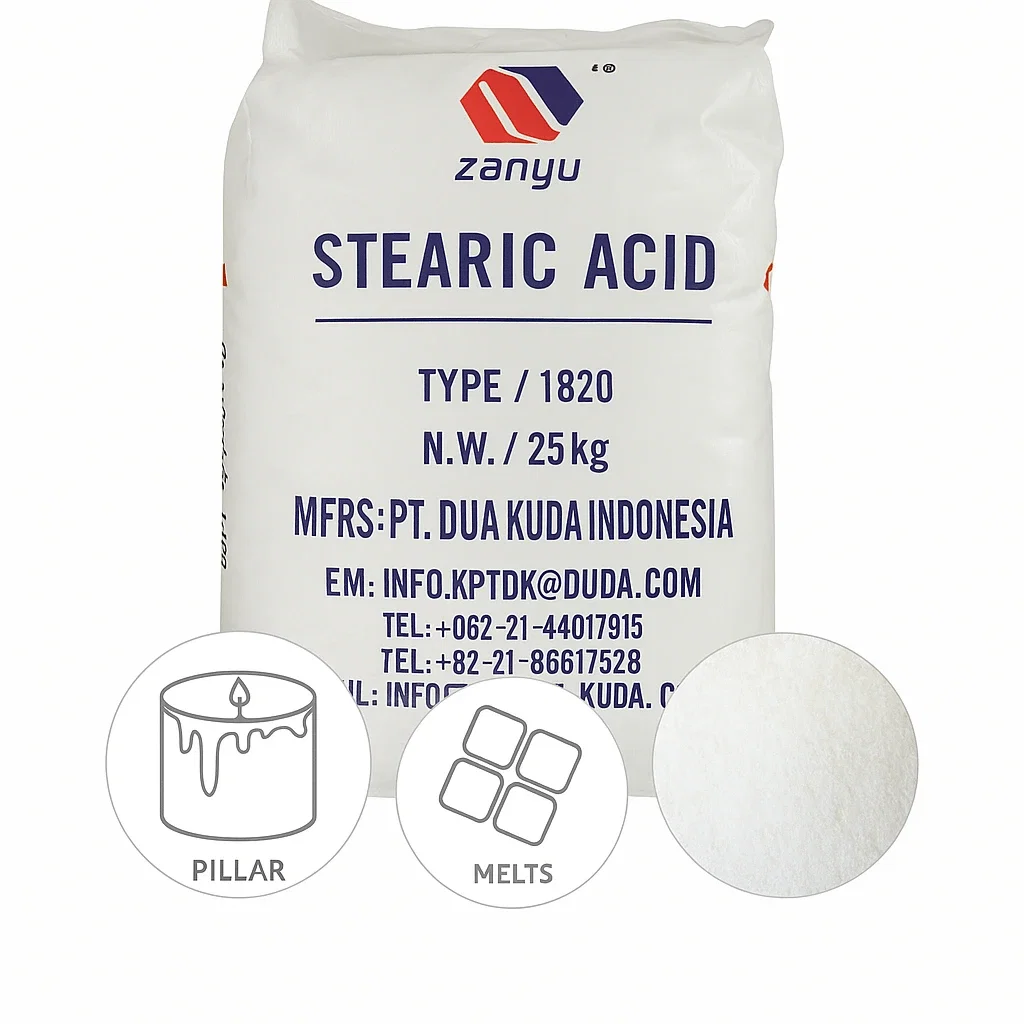
In a busy August, with dozens of recurring B2B orders, we received a new batch of type 1 paraffin and stearin. The same supplier. The same documentation. The same packaging. The same recipe we had been using for a long time.
We poured the standard recipe. On Monday morning, the whole batch had a ruined surface: small spots, pinholes, a changed texture. It was no longer the product we knew.
We called the distributor, but the answer was useless: they didn’t actually work with the material. They didn’t pour it. They didn’t take it out of the mould after 24 hours. They had no way of understanding what we were seeing in the workshop.
We lost 7 full days of production changing temperatures, proportions and procedures blindly. We ended up with compromised batches, yellowed wax and missed deliveries.
That was the moment we understood that a maker doesn’t need someone who just sends them a data sheet. They need a partner who has poured the material, ruined it and documented why.
Since then, we treat a new batch as a technical variable and check it before a large production run. Not because we can control everything, but because we know what it costs to ignore a batch that doesn’t behave like yesterday’s.
Practical checklist: what you do when you open a new box
Apply these isolation steps before you start the big melting pot.
1. Note the traceability
Keep the batch number from the packaging. Take a photo of the label before you fully open the box. It’s the first vital piece of technical information if something fails.
2. Do an isolated test of 300–500 g
Don’t risk kilograms of wax. Use the same recipe, the same fragrance, the same wick, the same mould and the same temperature as with the previous batch.
The aim of the test isn’t to get the perfect product first time, but to see whether the new batch behaves differently.
3. Apply the single-variable rule
If the test fails, adjust one variable per test. For example, you lower the pouring temperature by 2 °C, but you don’t change the wick, the fragrance and the mould at the same time.
If you change several things at once, you’ll never find out what caused the defect or what corrected it.
4. Keep a control sample from the old batch
If you work with the same wax all the time, keep 300–500 g from the old batch. When the new batch behaves differently, a parallel test quickly shows you whether the problem comes from the material or from the ambient conditions that day.
5. Don’t turn the first test into a large production run
The most expensive test is the one done directly on a customer’s order.
You see the price per kilogram. You see the loss in the failed batch.
When you ask for help, what information to send
If the recipe doesn’t turn out and you need help, don’t send just a photo of the ruined candle. Send the technical context:
- the type of wax used;
- the batch number;
- the fragrance percentage;
- the melting temperature;
- the pouring temperature;
- the type of wick;
- the type of container or mould;
- the cooling time and conditions;
- clear photos of the finished product.
Without this data, any answer remains a guess. With this data, we can start isolating the technical cause: wax, batch, wick, fragrance, temperature, mould or cooling.
A new batch isn’t treated as a formality
A new batch doesn’t automatically mean a problem. But it shouldn’t be treated as if nothing had changed either.
If you have a stable recipe, protect it with a small test, traceability and isolating the variables before a large production run.
If the information above has made clear why a new batch needs technical recalibration before mass production, the next step is to choose the raw material you work with more consciously.
To master the right temperature ranges when you test a fresh batch, use our technical guide: Correct temperatures for each type of wax — Servus Guide 2025.
For materials explained from real production, with traceability, clear limits and support when the recipe doesn’t turn out, see the category: Raw Materials — Candles & Soap.