
 EN
EN  Romana
 Magyar
 Special Wick No. 7 – Round Wick for Large Beeswax Candles
![Schreiber RD7 round cotton wick for large beeswax candles – Servus Collection [0]](https://op.gomagcdn.ro/domains/lumanariservus.ro/files/product/medium/fitil-special-nr-7-224538.webp "Schreiber RD7 round cotton wick for large beeswax candles – Servus Collection [0]")
![Schreiber RD7 round cotton wick for large beeswax candles – Servus Collection [1]](https://op.gomagcdn.ro/domains/lumanariservus.ro/files/product/medium/fitil-special-nr-7-100073.png "Schreiber RD7 round cotton wick for large beeswax candles – Servus Collection [1]")
![Schreiber RD7 round cotton wick for large beeswax candles – Servus Collection [2]](https://op.gomagcdn.ro/domains/lumanariservus.ro/files/product/medium/fitil-special-nr-7-618969.png "Schreiber RD7 round cotton wick for large beeswax candles – Servus Collection [2]")
![Schreiber RD7 round cotton wick for large beeswax candles – Servus Collection [3]](https://op.gomagcdn.ro/domains/lumanariservus.ro/files/product/medium/fitil-special-nr-7-207894.png "Schreiber RD7 round cotton wick for large beeswax candles – Servus Collection [3]")
![Schreiber RD7 round cotton wick for large beeswax candles – Servus Collection [1]](https://op.gomagcdn.ro/domains/lumanariservus.ro/files/product/original/fitil-special-nr-7-224538.webp "Schreiber RD7 round cotton wick for large beeswax candles – Servus Collection [1]")
![Schreiber RD7 round cotton wick for large beeswax candles – Servus Collection [2]](https://op.gomagcdn.ro/domains/lumanariservus.ro/files/product/original/fitil-special-nr-7-100073.png "Schreiber RD7 round cotton wick for large beeswax candles – Servus Collection [2]")
![Schreiber RD7 round cotton wick for large beeswax candles – Servus Collection [3]](https://op.gomagcdn.ro/domains/lumanariservus.ro/files/product/original/fitil-special-nr-7-618969.png "Schreiber RD7 round cotton wick for large beeswax candles – Servus Collection [3]")
![Schreiber RD7 round cotton wick for large beeswax candles – Servus Collection [4]](https://op.gomagcdn.ro/domains/lumanariservus.ro/files/product/original/fitil-special-nr-7-207894.png "Schreiber RD7 round cotton wick for large beeswax candles – Servus Collection [4]")
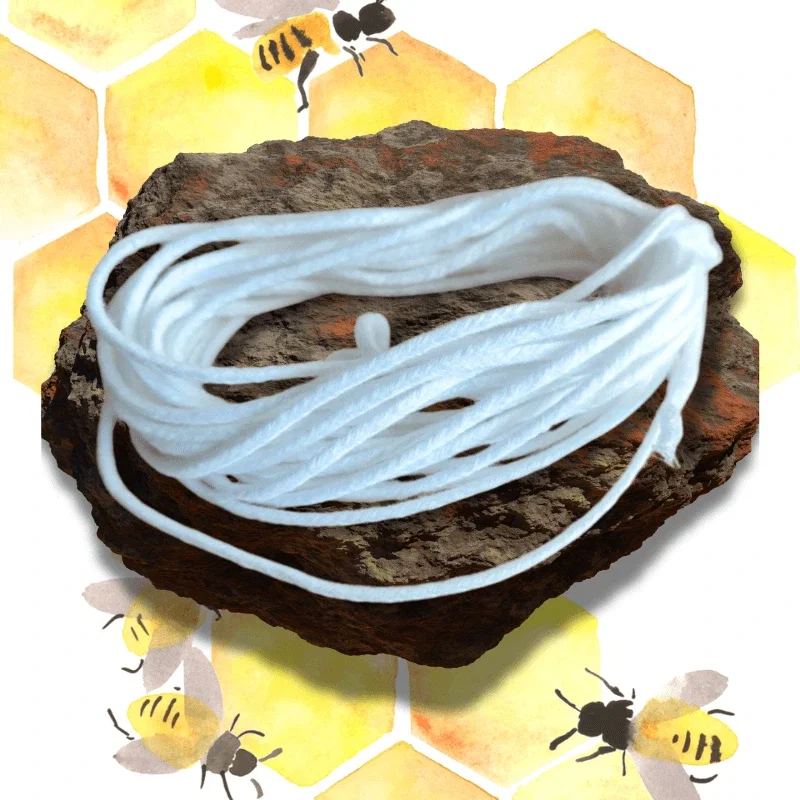
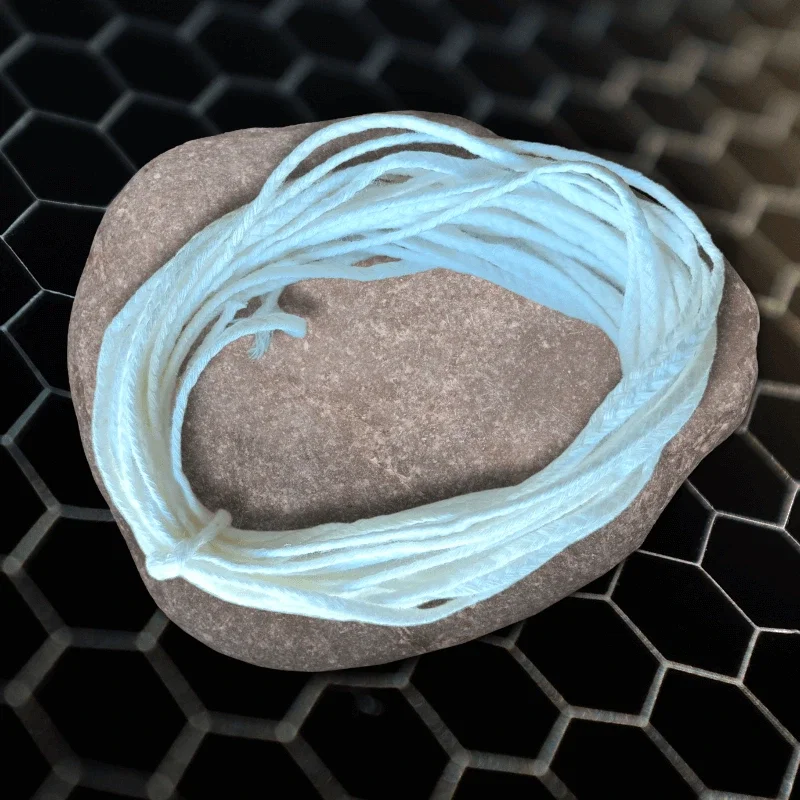
Special wick no. 7: a round, unwaxed cotton wick for large candles in beeswax, paraffin and blends with stearin or rapeseed; Schreiber GmbH, RD series. We use it in the workshop for wide candles rolled from honeycomb sheets: primed in wax and fitted with the V of the braid pointing down, it handles Ø 5.5–7 cm in rolled candles (4–7 sheets) and 5–8 cm in poured ones. Per the technical data sheet: BF-0 treatment, borax-free, 58 threads, strength 10.5 kg. It is not waxed and has no tab: for container candles, choose the waxed wick with tab.
Lungime: 5 metri
| Quantity Discounts | ||||
|---|---|---|---|---|
| From | Discount | Price / each | You save | |
| 5 each | -6% | 10,08 RON | 3,22 RON | + |
| 10 each | -12% | 9,44 RON | 12,87 RON | + |
| 20 each | -18% | 8,79 RON | 38,60 RON | + |
| 40 each | -24% | 8,15 RON | 102,94 RON | + |




- Description
- Characteristics
- Reviews (0)
- FAQ
From the Servus workshop
Special wick no. 7 is the stronger sibling of no. 5: a round wick of 100% braided cotton, with one flat face carrying a V-shaped braid, unwaxed, with BF-0 treatment, borax-free. It is made by Schreiber GmbH (Neuhof, Germany), RD series, and the manufacturer's documentation lists the series explicitly for beeswax candles (tealights or pillars), alongside 100% paraffin and blends of paraffin with stearin or rapeseed. With 58 threads against 47, no. 7 covers the large diameters: poured candles of 5–8 cm and wide candles rolled from honeycomb sheets. Like the whole RD series, it brings nothing into the recipe apart from cotton: you prime it yourself, in your own wax.
Sînziana says: “At large diameters, the wrong wick costs you in tunnelling: the candle burns down the middle and leaves thick walls of unburnt wax. Our wide rolled candles, from 4 sheets up, go on no. 7: soaked well in wax and fitted with the V pointing down, just like no. 5. The manufacturer's data sheet gives it for 5–8 cm in poured candles; in rolled candles, with the air between the layers, our range is 5.5–7 cm. What we haven't tested, we tell you needs testing.”
Behaviour in production
- The data sheet is written for poured candles; rolled candles follow different physics. The manufacturer gives no. 7 for Ø 50–80 mm, a range calculated on solid candles. A rolled candle has air between the layers and weighs almost half as much at the same diameter, so it needs less feeding: the real range for rolled candles is 5.5–7 cm, with 4–7 sheets. The data sheet isn't wrong; it is made for a different type of candle.
- Unwaxed means priming is a must, and that is its advantage. Before use, the wick is soaked in a thin coat of melted wax (in the workshop we use wax left over from other batches). At large diameters priming counts twice over: the first lighting has to open a wide melt pool, and a dry wick has nothing to do it with.
- Positioning isn't optional. The flat face with the V-shaped braid is laid with the V pointing down, towards the base of the candle. Fitted the other way round, the wick burns, but the flame isn't steady: checked in the workshop.
- The extra strength shows when rolling. No. 7 breaks at 10.5 kg (against 7.5 for no. 5, per the technical data sheets): when wide sheets are rolled tightly and the wick is under tension along its whole length, that reserve is forgiving.
- A new batch, even when it is made to order. Batches are identified by the RD series, but the behaviour belongs to the recipe: beeswax varies from one batch of combs to the next more than any industrial wax. With a new batch of wax or wick, burn a test piece; change one variable at a time.
Compatibility and sizing
The recommendations come from workshop practice; the manufacturer's data sheet covers poured candles, and the range for rolled candles is measured by us.
| Candle type | Diameter for no. 7 | Source |
|---|---|---|
| Poured (beeswax, paraffin, blends with stearin, rapeseed) | Ø 5–8 cm | manufacturer's data sheet |
| Rolled from honeycomb sheet | Ø 5.5–7 cm (4–7 sheets) | Servus workshop |
| Below 4 cm poured / 4.5 cm rolled | move down to Special wick no. 5 | |
Between the ranges of the two sizes (4–5 cm poured), the test decides: start from the end of the range closest to your diameter and burn a trial piece.
A complete system tested in the workshop: this wick + waxes for moulds (pillar); in the same place you'll also find the honeycomb wax sheets for rolled candles. If you pour or roll steady volumes, we'd like to see you in Servus Club.
Stated limits
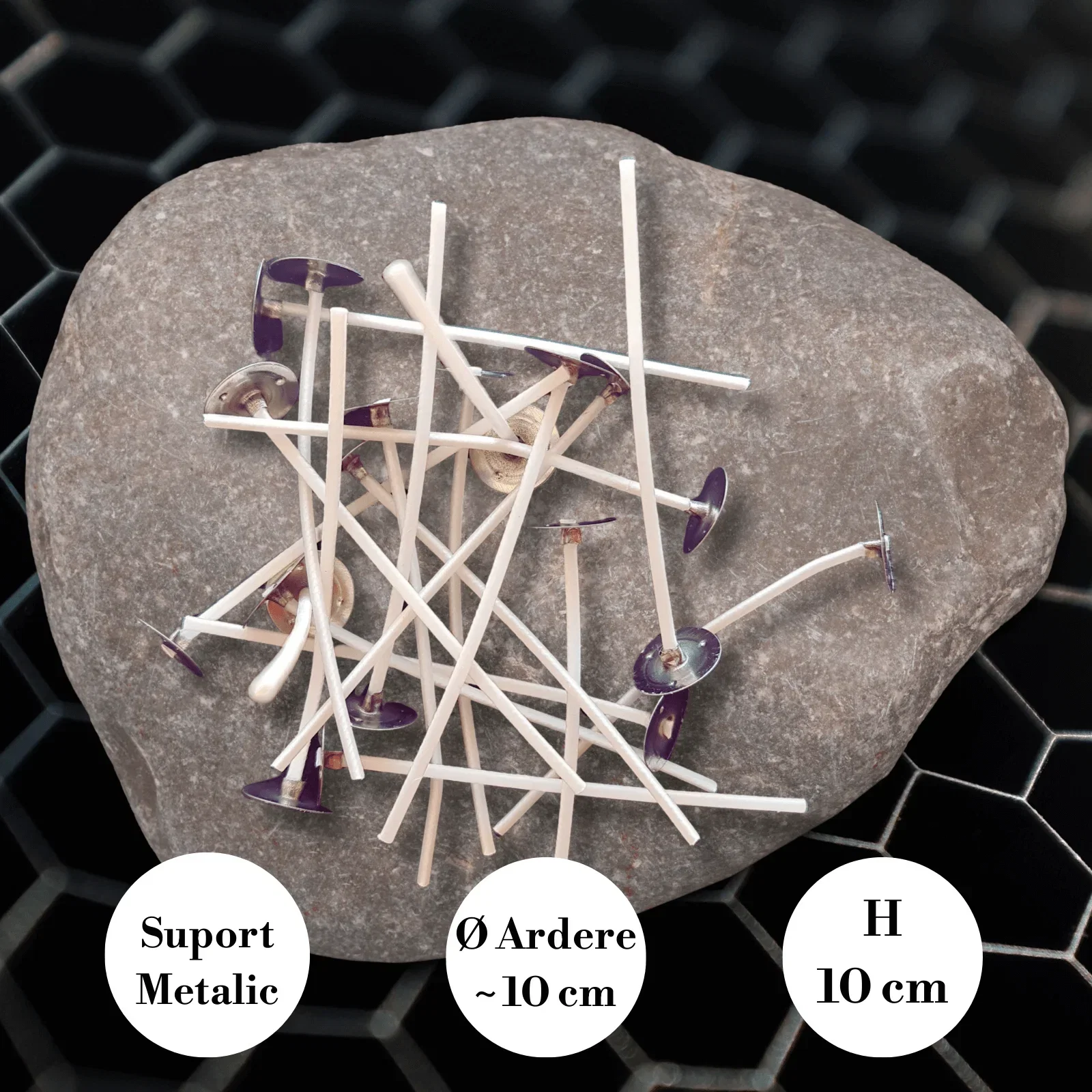
- It is NOT waxed and does NOT have a metal tab: for container candles ready to stick down and pour, use the waxed cotton wick with tab for container candles.
- It is NOT documented for soy or coconut wax: the manufacturer's documentation covers beeswax, paraffin, stearin (max. 15%) and rapeseed. For containers in soft plant waxes, the tested choice is the waxed wick with tab.
- It is NOT for small diameters: below its range, no. 7 is oversized: a large flame, smoke, wax used up too fast. That is where no. 5 comes in.
- It is NOT a wick for every candle: between diameter ranges, or with a new recipe (wax, dye, fragrance), the test is still yours to do.
Full diagnosis: the Servus guide to choosing a wick.
Even when the specs are clear, the result depends on the diameter, the wax and the type of candle. Before a large production run, make one test piece on the final recipe.
Technical properties
| Property | Value (Schreiber TDS / catalogue) | Workshop note |
|---|---|---|
| Manufacturer / series | Schreiber GmbH / RD 7 | Named, verifiable source |
| Application | 100% beeswax (tealights or pillars); 100% paraffin; blends of paraffin with stearin (max. 15%), rapeseed and beeswax; taper and household candles | Range for rolled candles measured in the workshop |
| Treatment | BF-0, borax-free | — |
| Construction | Round wick, 100% bleached cotton, 58 threads; flat face with V-shaped braid | The V is fitted pointing down, towards the base |
| Yield | 588 m/kg | — |
| Breaking strength | 10.5 kg | A useful reserve for tight rolling |
| Waxing | — | Unwaxed: primed in your own wax |
| Safety status | Not classified as hazardous (GefStoffVO); cellulose fibres, impregnated with inorganic salts (Schreiber MSDS, rev. 06.2025) | MSDS available on request, for a certification file |
Sizing for your recipe isn't in the data sheet: it is set by testing.
Step by step
- Choose the size by candle type: poured Ø 5–8 cm or rolled Ø 5.5–7 cm (4–7 sheets) → no. 7; below these ranges → no. 5.
- Prime the wick: soak it in a thin coat of melted wax and let it harden straight.
- For rolled candles: lay the wick with the V of the braid pointing down, towards the base, and roll the first sheet tightly around it.
- For poured candles: centre the primed wick in the mould before pouring.
- Burn a test piece on the final recipe; if it tunnels, go up one size; if it smokes or the flame flickers, go down.
- Supplied as 5 m: a single continuous length, with no knots.
Servus Collection
Since 2010, from craft to real distribution.
We sell selected materials, tested and explained from real workshop experience. From Maramureș, for workshops in Romania and abroad.
Servus. See you at the pouring table.
Condition: new
Tip produs Servus MP: fitil_lumanari
What candles is special wick no. 7 suitable for?
For large candles: poured in beeswax, paraffin or blends with stearin and rapeseed, with diameters of 5 to 8 cm, and wide candles rolled from honeycomb sheets, of 5.5 to 7 cm. It is the stronger sibling of no. 5, with 58 threads against 47. In the Servus workshop we use it for rolled candles of 4 sheets and up.
Is it suitable for candles labelled “100% natural”, or for certification?
Yes. The wick is unwaxed cotton, and the manufacturer approves the RD series in its documentation for 100% beeswax. You prime it in your own wax, so nothing goes into the finished product beyond your own recipe. For your certification file, we can provide the Schreiber technical data sheet and safety data sheet.
How do I prepare the wick before use?
As with no. 5, in two steps. Priming: soak the wick in a thin coat of melted wax and let it harden straight. At large diameters priming counts twice over, because the first lighting has to open a wide melt pool. Then positioning: the V of the braid on the flat face is laid pointing down, towards the base of the candle, otherwise the flame isn’t steady.
What diameters does no. 7 cover, and what do I do between sizes?
Poured Ø 5 to 8 cm per the manufacturer’s data sheet, rolled Ø 5.5 to 7 cm with 4 to 7 sheets, measured in the workshop. Between the ranges of the two sizes, that is poured candles of 4 to 5 cm, the test decides: start from the size whose range is closest to your diameter and burn a trial piece before a run.
Why does the candle tunnel even though the wick looks big?
Tunnelling at large diameters usually has three causes. The candle’s diameter is beyond even the range of no. 7: above 8 cm poured, a single wick no longer reaches. The wick wasn’t primed and the first melt pool didn’t open fully. Or the wax is denser than the reference recipe, for example hard-pressed beeswax. Correct one thing only, then test again.
Does it work in container candles, in a glass or jar?
It isn’t the first choice. No. 7 has no metal tab and isn’t waxed. For containers there is the waxed wick with tab, ready assembled, with burn diameters up to 10 cm, which you stick down and pour straight away. No. 7 remains the choice for large poured candles, wide rolled candles and beeswax pillars, where a clean composition matters.
Why buy the wick from Servus?
Because we use it ourselves. The manufacturer is named, Schreiber GmbH, RD series, and our wide candles rolled from honeycomb sheets go on this wick. Each order comes from an identifiable batch, and when your recipe doesn’t work out, you get a technical diagnosis, not excuses. Makers with steady volumes get dedicated terms in Servus Club.