
 EN
EN  Romana
 Magyar
1838.png "French Color & Fragrance") HOT WINE Fragrance Oil
HOT WINE Fragrance Oil
![Hot Wine fragrance oil EU23853F, mulled wine, for candles and soap – Servus Collection [0]](https://op.gomagcdn.ro/domains/lumanariservus.ro/files/product/medium/ulei-de-parfum-hot-wine-448554.png "Hot Wine fragrance oil EU23853F, mulled wine, for candles and soap – Servus Collection [0]")
![Hot Wine fragrance oil EU23853F, mulled wine, for candles and soap – Servus Collection [1]](https://op.gomagcdn.ro/domains/lumanariservus.ro/files/product/medium/ulei-de-parfum-lavender-50-ml-06884262417506592972945260314646176161905243884292868799184821.webp "Hot Wine fragrance oil EU23853F, mulled wine, for candles and soap – Servus Collection [1]")
![Hot Wine fragrance oil EU23853F, mulled wine, for candles and soap – Servus Collection [2]](https://op.gomagcdn.ro/domains/lumanariservus.ro/files/product/medium/ulei-de-parfum-hot-wine-980491.webp "Hot Wine fragrance oil EU23853F, mulled wine, for candles and soap – Servus Collection [2]")
![Hot Wine fragrance oil EU23853F, mulled wine, for candles and soap – Servus Collection [1]](https://op.gomagcdn.ro/domains/lumanariservus.ro/files/product/original/ulei-de-parfum-hot-wine-448554.png "Hot Wine fragrance oil EU23853F, mulled wine, for candles and soap – Servus Collection [1]")
![Hot Wine fragrance oil EU23853F, mulled wine, for candles and soap – Servus Collection [2]](https://op.gomagcdn.ro/domains/lumanariservus.ro/files/product/original/ulei-de-parfum-lavender-50-ml-06884262417506592972945260314646176161905243884292868799184821.webp "Hot Wine fragrance oil EU23853F, mulled wine, for candles and soap – Servus Collection [2]")
![Hot Wine fragrance oil EU23853F, mulled wine, for candles and soap – Servus Collection [3]](https://op.gomagcdn.ro/domains/lumanariservus.ro/files/product/original/ulei-de-parfum-hot-wine-980491.webp "Hot Wine fragrance oil EU23853F, mulled wine, for candles and soap – Servus Collection [3]")
HOT WINE #EU23853F is a spiced fragrance oil from French Color & Fragrance International (Germany), liquid: mulled wine built from cinnamon, orange peel and cloves, with a sweet note of coumarin. The flash point is 72 °C, safety information; the fragrance is added at the temperature on the wax’s data sheet, and we stay below it. Density ≈ 0.95, so 50 ml ≈ 47.5 g. IFRA limits: candles no limit, soap and reed diffuser 4.40%, creams 0.57%. Nine declarable allergens; gloves when weighing.
Cantitate: 50 ml
| Quantity Discounts | ||||
|---|---|---|---|---|
| From | Discount | Price / each | You save | |
| 5 each | -6% | 27,96 RON | 8,92 RON | + |
| 10 each | -12% | 26,17 RON | 35,69 RON | + |
| 20 each | -18% | 24,39 RON | 107,08 RON | + |
| 40 each | -24% | 22,60 RON | 285,54 RON | + |











- Description
- Characteristics
- Download (3)
- Video (1)
- Reviews (0)
- FAQ
From the Servus workshop: what it is
HOT WINE #EU23853F is a liquid fragrance oil from the spiced family, made by French Color & Fragrance International GmbH (Germany), in a 50 ml bottle. On the safety data sheet it appears under the name HOT SPICED WINE, with the same code. Read from its composition, it is mulled wine made from spices: cinnamic aldehyde (5.5–11%) and alpha-methylcinnamic aldehyde for the cinnamon, orange oil (2.5–5%) for the orange peel, eugenol and clove leaf oil for the cloves, coumarin for a sweet, hay-like note, and a fruity touch from damascenone and aldehyde C-16.
Sînziana says: “Hot Wine is the mulled wine from the Christmas market: cinnamon, orange and cloves. With this one I watch two things. The temperature — I add the fragrance at the temperature on the wax’s data sheet, with the pot off the heat; the flash point, 72 degrees, is the safety figure for handling, and with this scent I stay below it. And my hands — the cinnamon in it is a strong allergen, so I wear gloves when weighing.”
Behaviour in production
It is added at the fragrance-adding temperature on the wax’s data sheet, and with this scent we stay below 72 °C. The flash point on the data sheet is 72 °C, and many candle recipes add the fragrance somewhere between 65 and 75 °C. The flash point is safety information for handling, not the fragrance-adding temperature: the temperature comes from your wax’s data sheet, and with this scent we also check, on the thermometer, not by eye, that it is below 72 °C.
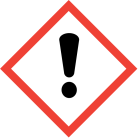
The cinnamon is the part that calls for gloves. Cinnamic aldehyde is at 5.5–11% of the composition, and the data sheet classifies the blend as a skin sensitiser (H317) and a skin and eye irritant (H315, H319). The concentrate isn’t touched with bare hands: you weigh it wearing gloves, and if it gets on your skin, you wash it off with plenty of water.
The ceiling changes a lot from one product to another. For candles the IFRA certificate sets no limit, for soap it stops you at 4.40%, and for body cream at 0.57%. It is a scent built for candles, soap and room spray; for products that stay on the skin it is too tight to make sense.
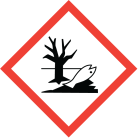
It doesn’t go down the sink. The data sheet gives it H411 — toxic to aquatic life with long lasting effects. Leftovers, cloths and empty containers go to a collection point, not down the drain.
With a new batch, test before the large production run. Note the batch number on the label, the wax, the percentage, the wick and the container, then compare on a small piece, on your final recipe.
Dosage by application: how you build a collection
With the same scent you make a candle, soap, room spray or diffuser — but each product has its own ceiling in the scent’s IFRA certificate (amendment 51, issued 13.11.2025):
| Application | IFRA category | Maximum |
|---|---|---|
| Candles (any type) | Cat 12 | no limit (100%) |
| Room spray | Cat 10B | 16.19% |
| Soap, shower gel, shampoo (rinse-off) | Cat 9 | 4.40% |
| Reed diffuser, laundry and dishwashing detergent | Cat 10A | 4.40% |
| Fine fragrance, eau de toilette | Cat 4 | 2.24% |
| Hair treatments | Cat 7A · 7B | 1.52% |
| Body lotions and creams, hand cream | Cat 5A · 5C | 0.57% |
| Toner, face cream | Cat 5B | 0.37% |
| Make-up, eye products | Cat 3 | 0.18% |
| Deodorant, baby products, wipes, sanitary products | Cat 2 · 5D · 8 · 11A · 11B | 0.12% |
| Lip products, toys | Cat 1 | 0% — prohibited |
| Toothpaste, mouthwash | Cat 6 | 0% — prohibited |
The label for your reed diffuser with Hot Wine, on a Diffusol M base, comes out of the calculator.
(The figures are rounded down, to two decimal places; the certificate gives them to eight. A safety limit is never rounded up.)
Read it like this: for candles, the wax stops you, not the certificate. For soap and reed diffusers you stop at 4.40%; for room spray you have room up to 16.19%. On the skin, on the other hand, the ceilings drop below 1%.
Candles: the real ceiling comes from your wax’s data sheet. In our formulas: 6–8% in containers, 5–6% in moulds, 4–6% in figurines, and a first scented candle starts from 5%. Weighed, not counted in drops — the density is ≈ 0.95, so 50 ml ≈ 47.5 g, enough for about 790 g of wax at 6%. Added at the fragrance-adding temperature on the wax’s data sheet, and with this scent we stay below 72 °C; stirred slowly for a minute or two.
Soap and cosmetics: keep to the ceiling of the exact category in the table. In the workshop we work at 1–3% in soap. For your product’s label, the scent’s allergen report is under Download, on this page — for this scent it has nine entries.
A complete system — what you pour together with the scent: for candles, container wax or wax for moulds, the right wick and liquid dye. For soap: cosmetic bases and soap colourant. For volumes and continuity of stock, Servus Club.
Stated limits
It is NOT for lips, toys, toothpaste or mouthwash — IFRA restricts it to 0% (Cat 1 and Cat 6).
The flash point is NOT the fragrance-adding temperature — 72 °C is the safety figure on the data sheet; you add the fragrance at the temperature on the wax’s data sheet, with the pot off the heat, and with this scent we stay below it.
It is NOT the scent for creams, deodorants or a baby line — the ceilings are 0.57%, 0.12% and 0.12%, below what makes sense in a recipe.
It does NOT go above 4.40% in a reed diffuser — that is the IFRA ceiling for category 10A, even if the diffuser base would take more.
It is NOT an essential oil and it is NOT natural — it is a perfumery composition, with essential oils (orange, clove leaf, cassia) in the formula.
How to read IFRA limits in practice: IFRA fragrances for candles — how much you’re allowed vs. how it burns. How much you add, when you add it and why sometimes you can’t smell it: fragrance oil for candles.
What needs checking on your recipe: how strongly it comes through cold and while burning in your wax, at your percentage · whether it changes the shade of white wax (the colour of the liquid isn’t given on the data sheet) · the wick on your diameter at the final percentage. Before the large production run, one small piece.
Technical properties
| Property | Value (FCF SDS v2.1 / IFRA am. 51) | Workshop note |
|---|---|---|
| Manufacturer / code | French Color & Fragrance International GmbH / EU23853F | on the data sheet: HOT SPICED WINE |
| Physical state | liquid | dosed by weight |
| Relative density | ≈ 0.95 | 50 ml ≈ 47.5 g |
| Flash point | 72 °C | safety information, not the fragrance-adding temperature; we stay below it |
| Olfactory family | spiced — cinnamon, orange, cloves, a sweet note of coumarin | from the composition declared on the data sheet |
| CLP classification | GHS07 · GHS09 · Warning · H315 H317 H319 H411 | gloves when weighing; leftovers don’t go down the drain |
| Declarable allergens | 9 in the report: cinnamic aldehyde 11.12%, d-limonene 4.78%, eugenol 3.85%, coumarin 0.75%, linalool 0.30%, benzyl benzoate 0.04%, isoeugenol, cinnamic alcohol, geraniol below 0.01% | the report is under Download |
| SVHC status | no substance on the REACH candidate list (SDS §15) | — |
| Storage | 25 °C, original container closed, in a cool, ventilated place, away from ignition sources and direct sunlight (SDS §7) | not in corrodible metal |
| UFI | FW14-12QG-H00X-AVUT | on the label |
Behaviour per recipe (how strongly it comes through in each wax, the final shade) is set by testing — it isn’t on the data sheet.
Step by step
- Check the IFRA limit for your application (the table above) — for a reed diffuser, 4.40%.
- Weigh, wearing gloves: 50 ml ≈ 47.5 g. At low percentages, the scale beats the measuring jug.
- For candles, add it at the fragrance-adding temperature on the wax’s data sheet, with the pot off the heat (with this scent, below 72 °C), and stir slowly for a minute or two.
- For soap, download the allergen report and write the label from it — here it has nine entries.
- Test small — one piece on the final recipe, judged after two days: scent cold, while burning, the colour.
Servus Collection
Since 2010, from craft to real distribution.
We sell selected materials, tested and explained from real workshop experience. From Maramureș, for workshops in Romania and Europe.
Servus. See you at the pouring table.
Condition: new
Tip produs Servus MP: ulei_parfum
At what temperature do I add Hot Wine to the wax?
At the fragrance-adding temperature on your wax’s data sheet, with the pot off the heat. The flash point on the safety data sheet, 72 °C, is safety information for handling, not the fragrance-adding temperature; with this scent we stay below it, and many recipes add the fragrance between 65 and 75 °C. Check it on the thermometer, not by eye.
What do I do if my recipe isn’t working?
Don’t change all the variables at once, because then you can’t isolate the cause. Check in turn the wax and its batch, the weighed percentage, the temperature at which you added the fragrance, the wick and how many days ago the candle was poured. With this scent we stay below 72 °C, so temperature is the first thing to compare with your notes. Send us the details on WhatsApp at +40 726 162 810 (we answer in English).
What is HOT WINE #EU23853F fragrance oil and what is it used for?
It is a spiced fragrance oil made by French Color & Fragrance International (Germany), named HOT SPICED WINE on the safety data sheet: mulled wine built from cinnamon, orange peel, cloves and a sweet note of coumarin. It isn’t an essential oil and it isn’t natural. It is used in candles, soap, room spray and diffusers, each at its own IFRA ceiling. It isn’t used on lips, in toys or in oral products.
What fragrance percentage do I use for each product?
The IFRA limits, amendment 51, for this scent: candles no limit, room spray 16.19%, soap and rinse-off products 4.40%, reed diffuser 4.40%, fine fragrance 2.24%, hair products 1.52%, body and hand creams 0.57%, face cream 0.37%, deodorant and baby products 0.12%, lips and oral products 0%. For candles, in our formulas, 6–8% in containers and 5–6% in moulds.
Can I put 10–20% Hot Wine in a reed diffuser?
No. The IFRA ceiling for a reed diffuser, category 10A, is 4.40% for this scent, however much the diffuser base would take. The ceiling differs from one scent to another, because each one has its own certificate. If you want a stronger scent in the room, room spray has a ceiling of 16.19%, and the candle has no limit from the certificate.
Which allergens go on the label of a soap with Hot Wine?
The scent’s allergen report has nine entries, with cinnamic aldehyde at the top, at 11.12%, then d-limonene 4.78%, eugenol 3.85% and coumarin 0.75%. You work them out at your usage percentage and put on the label whatever exceeds the thresholds in Regulation 1223/2009. The report, the safety data sheet and the IFRA certificate can be downloaded from the page, under Download.
Why choose Servus for this scent?
The scent is made by French Color & Fragrance International, a named, verifiable source, and this page is written from its safety data sheet and IFRA certificate, not from advertising. We also tell you what is tight about it: the 72 °C temperature, the 4.40% ceiling in diffusers and below 1% on the skin. Each bottle has a compliant label, with batch and UFI code; the documents can be downloaded from the page. Servus Club has volume terms for active workshops.