
 EN
EN  Romana
 Magyar
1838.png "French Color & Fragrance") ORANGE Fragrance Oil 50 ml
ORANGE Fragrance Oil 50 ml
![Orange EU22769F fragrance oil, orange and cinnamon, for candles and soap – Servus Collection [0]](https://op.gomagcdn.ro/domains/lumanariservus.ro/files/product/medium/ulei-de-parfum-orange-50-ml-664911.png "Orange EU22769F fragrance oil, orange and cinnamon, for candles and soap – Servus Collection [0]")
![Orange EU22769F fragrance oil, orange and cinnamon, for candles and soap – Servus Collection [1]](https://op.gomagcdn.ro/domains/lumanariservus.ro/files/product/medium/ulei-de-parfum-lavender-50-ml-068842624175065929729452603146461761619052973095522444.webp "Orange EU22769F fragrance oil, orange and cinnamon, for candles and soap – Servus Collection [1]")
![Orange EU22769F fragrance oil, orange and cinnamon, for candles and soap – Servus Collection [2]](https://op.gomagcdn.ro/domains/lumanariservus.ro/files/product/medium/ulei-de-parfum-cashmere-kush-50-ml-copie-copie-120357.webp "Orange EU22769F fragrance oil, orange and cinnamon, for candles and soap – Servus Collection [2]")
![Orange EU22769F fragrance oil, orange and cinnamon, for candles and soap – Servus Collection [1]](https://op.gomagcdn.ro/domains/lumanariservus.ro/files/product/original/ulei-de-parfum-orange-50-ml-664911.png "Orange EU22769F fragrance oil, orange and cinnamon, for candles and soap – Servus Collection [1]")
![Orange EU22769F fragrance oil, orange and cinnamon, for candles and soap – Servus Collection [2]](https://op.gomagcdn.ro/domains/lumanariservus.ro/files/product/original/ulei-de-parfum-lavender-50-ml-068842624175065929729452603146461761619052973095522444.webp "Orange EU22769F fragrance oil, orange and cinnamon, for candles and soap – Servus Collection [2]")
![Orange EU22769F fragrance oil, orange and cinnamon, for candles and soap – Servus Collection [3]](https://op.gomagcdn.ro/domains/lumanariservus.ro/files/product/original/ulei-de-parfum-cashmere-kush-50-ml-copie-copie-120357.webp "Orange EU22769F fragrance oil, orange and cinnamon, for candles and soap – Servus Collection [3]")
ORANGE #EU22769F is a citrus fragrance oil from French Color & Fragrance International (Germany), liquid: warm orange, with cinnamon, vanilla and musk, not a dry peel. It carries “Danger” on the label (H304): the bottle is kept closed, away from children. The flash point is 75 °C, safety information; the fragrance goes in at the temperature on the wax's data sheet; density ≈ 0.93, 50 ml ≈ 46.5 g. IFRA limits: candles no limit, soap and reed diffuser 4.69%, creams 0.61%. Gloves when weighing.
| Quantity Discounts | ||||
|---|---|---|---|---|
| From | Discount | Price / each | You save | |
| 5 each | -6% | 34,27 RON | 10,94 RON | + |
| 10 each | -12% | 32,09 RON | 43,75 RON | + |
| 20 each | -18% | 29,90 RON | 131,26 RON | + |
| 40 each | -24% | 27,71 RON | 350,02 RON | + |










- Description
- Characteristics
- Download (3)
- Video (1)
- Reviews (2)
- FAQ
From the Servus workshop: what it is
ORANGE #EU22769F is a liquid fragrance oil from the citrus family, made by French Color & Fragrance International GmbH (Germany), in a 50 ml bottle. Read from the composition, it isn't a dry orange, all peel, but a warm one: orange oil (8.7–17.4%) and aldehyde C-10 give the peel, cinnamaldehyde — the cinnamon note, at 5.2–10.4% — and eugenol give it the warmth of spice, vanillin rounds it off, and the musk and the salicylates settle it. Lemongrass and Litsea cubeba add a lemony edge.
Sînziana says: “Orange isn't a dry orange — it has cinnamon in it, that's why it smells warm. I say two things every time: it has ‘Danger’ on the label, so the bottle is kept closed, away from children, and it is never poured into a drinks container. And the temperature: I add the fragrance at the temperature on the wax's data sheet, with the pot off the heat. The flash point, 75 degrees, is the safety figure for handling, not the fragrance-adding temperature.”
Behaviour in production
It has “Danger” on the label, not “Warning”. It comes from H304: if it is swallowed and gets into the airways, it may be fatal. It isn't a problem in normal use — it's a storage rule. The bottle stays closed, in its original packaging, within reach of adults only, and is never decanted into a drinks container. If swallowed, do not induce vomiting; call a poison centre or a doctor immediately.
It goes in at the fragrance-adding temperature on the wax's data sheet. The flash point on the data sheet is 75 °C: it is safety information for handling, not the fragrance-adding temperature. The temperature comes from your wax's data sheet, and you read it on the thermometer, not by eye.
The cinnamon is the part that calls for gloves. Cinnamaldehyde is at 5.2–10.4% of the composition, and the data sheet classifies the mixture as irritating to skin and eyes (H315, H319) and as a skin sensitiser (H317). You weigh it wearing gloves and safety glasses, and if it gets on your skin you wash with plenty of water.
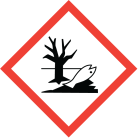
It doesn't go down the sink. The data sheet gives it H411 — toxic to aquatic life with long lasting effects. Leftovers, cloths and empty containers go to a collection point, not down the drain.
With a new batch, test before the big production run. Note the batch number on the label, the wax, the percentage, the wick and the container, then compare on a small piece, on your final recipe.
Dosage by application: how you build a collection
With the same scent you make a candle, soap, room spray, diffuser or cream — but each product has its own ceiling from the scent's IFRA certificate (Amendment 51, issued 21 June 2026):
| Application | IFRA category | Maximum |
|---|---|---|
| Candles (any type) | Cat 12 | no limit (100%) |
| Room spray | Cat 10B | 17.24% |
| Soap, shower gel, shampoo (rinse-off) | Cat 9 | 4.69% |
| Reed diffuser, laundry and dishwashing detergent | Cat 10A | 4.69% |
| Fine fragrance, eau de toilette | Cat 4 | 2.39% |
| Hair treatments | Cat 7A · 7B | 1.62% |
| Body lotions and creams, hand cream | Cat 5A · 5C | 0.61% |
| Toner, face cream | Cat 5B | 0.40% |
| Make-up, eye products | Cat 3 | 0.20% |
| Deodorant, baby products, wipes, sanitary products | Cat 2 · 5D · 8 · 11A · 11B | 0.13% |
| Lip products, toys | Cat 1 | 0% — prohibited |
| Toothpaste, mouthwash | Cat 6 | 0% — prohibited |
The label for your reed diffuser with Orange, on a Diffusol M base, you get from the calculator.
(The figures are rounded down, to two decimal places; the certificate gives them to eight. A safety limit is never rounded up.)
Read it like this: in a candle, the wax stops you, not the certificate. In soap and in the reed diffuser you stop at 4.69%, in a room spray you have room up to 17.24%. In creams and on the face, on the other hand, the ceilings drop below 1%: 0.61% in creams, 0.40% in face cream.
Candles: the real ceiling comes from your wax's data sheet. In our formulas: 6–8% in containers, 5–6% in moulds, 4–6% in figurines, and the first scented candle starts from 5%. Weighed, not counted in drops — the density is ≈ 0.93, so 50 ml ≈ 46.5 g, which is enough for about 775 g of wax at 6%. Added at the fragrance-adding temperature on the wax's data sheet, stirred slowly for a minute or two.
Soap and cosmetics: keep to the ceiling of the exact category in the table. For soap the ceiling is 4.69%; in the workshop we work at 1–3%. For your product's label, the scent's allergen report is under Download, on this page — on the extended list, with orange oil, limonene and cinnamaldehyde at the top.
A complete system — what you pour together with the scent: for candles, container wax or wax for moulds, the right wick and liquid dye. For soap: cosmetic bases and soap colourant. For volumes and stock continuity, Servus Club.
Stated limits
It is NOT for lips, toys, toothpaste or mouthwash — IFRA restricts it to 0% (Cat 1 and Cat 6).
It is NEVER decanted into drinks bottles or unmarked containers — the label carries “Danger” and H304, an aspiration hazard. It stays in its original packaging, closed, within reach of adults only.
The flash point is NOT to be confused with the fragrance-adding temperature — 75 °C is the safety figure on the data sheet; you add the fragrance at the temperature on the wax's data sheet, with the pot off the heat.
It is NOT the scent for creams, deodorants or the baby line — the ceilings are 0.61%, 0.13% and 0.13%, below what makes sense in a recipe.
It is NOT natural orange and NOT an essential oil — it is a perfumery composition, with orange oil, lemongrass and Litsea cubeba in the formula, plus synthetic cinnamon (cinnamaldehyde).
How to read IFRA limits in practice: IFRA fragrances for candles — how much you're allowed vs. how it burns. How much to add, when to add it and why sometimes you can't smell it: fragrance oil for candles.
What to check on your recipe: how strongly it comes through cold and when burning in your wax, at your percentage · whether it changes the shade of white wax (the liquid is pale yellow to amber) · the wick on your diameter at the final percentage. Before the big production run, a small piece.
Technical properties
| Property | Value (FCF SDS v1.0 / IFRA Am. 51) | Workshop note |
|---|---|---|
| Manufacturer / code | French Color & Fragrance International GmbH / EU22769F | named, verifiable source |
| Physical state / colour | liquid, pale yellow to amber | dosed by weight |
| Relative density | ≈ 0.93 | 50 ml ≈ 46.5 g |
| Flash point | 75 °C | safety information, not the fragrance-adding temperature |
| Olfactory family | warm citrus — orange, cinnamon, vanilla, musk | from the composition declared on the data sheet |
| CLP classification | GHS07 · GHS08 · GHS09 · Danger · H304 H315 H317 H319 H411 | not to be decanted; away from children; gloves when weighing |
| Declarable allergens | 14 entries in the report of 24 March 2026 (extended list; orange oil appears twice): orange oil 17.39%, limonene 16.6%, cinnamaldehyde 10.43%, linalool 3.2%, benzyl salicylate 2.17%, amyl salicylate 2.17%, vanillin 1.73%, eugenol 1.3%; the rest below 0.6% | the report is under Download |
| SVHC status | no substance from the REACH candidate list (SDS §15) | — |
| Storage | 25 °C, locked up, original container closed, cool and ventilated place, away from heat (SDS §7) | not in corrodible metal |
| UFI | YU11-D2H5-H00G-8U5V | on the label |
Behaviour per recipe (how strongly it comes through in each wax, the final shade) is set by testing — it isn't on the data sheet.
Step-by-step guide
- Check the IFRA limit for your application (the table above) — for the reed diffuser, 4.69%; in creams and on the face, below 1%.
- Weigh it, wearing gloves: 50 ml ≈ 46.5 g. At low percentages, the scale beats the measuring cup.
- For candles, add it at the fragrance-adding temperature on the wax's data sheet, with the pot off the heat, and stir slowly for a minute or two.
- For soap, download the allergen report and write the label from it.
- Test small — one piece on the final recipe, judged after two days: the scent cold, when burning, the colour.
Servus Collection
Since 2010, from craft to real distribution.
We sell selected materials, tested and explained from real workshop experience. From Maramureș, for workshops in Romania and Europe.
Servus. See you at the pouring table.


Condition: new
Tip produs Servus MP: ulei_parfum
At what temperature do I add Orange to the wax?
At the fragrance-adding temperature on your wax’s data sheet, with the pot off the heat. Check it on the thermometer, not by eye. The flash point on the safety data sheet, 75 °C, is safety information for handling, not the fragrance-adding temperature. Stir slowly for a minute or two.
What do I do if my recipe isn’t working?
Don’t change all the variables at once, because then you can no longer isolate the cause. Check, one at a time, the wax and its batch, the percentage weighed, the temperature at which you added the fragrance, the wick and how many days ago the candle was poured. Contact us on WhatsApp or by phone at +40 726 162 810 (we answer in English) with the details.
Why choose Servus for this scent?
The scent is made by French Color & Fragrance International, a named and verifiable source, and this page is written from its safety data sheet and its IFRA certificate, not from advertising. We also tell you what you need to know before you buy: it carries “Danger” on the label, and in creams and on the face the ceilings are below 1%. Every bottle has a compliant label, with batch number and UFI code; the documents can be downloaded from the page. Servus Club has volume terms for active workshops.
What is ORANGE #EU22769F fragrance oil and what is it used for?
It is a citrus fragrance oil made by French Color & Fragrance International (Germany): warm orange, with cinnamon, vanilla and musk. It isn’t an essential oil and it isn’t natural orange: it’s a perfumery composition, with orange oil in the formula. It is used in candles, room sprays, soap and diffusers, each at its own IFRA ceiling. In creams and on the face the ceilings are below 1%, and on lips and in oral products, 0%.
Why does the label say “Danger” and what do I need to do?
Because the mixture is classified H304: it may be fatal if swallowed and enters airways. It isn’t a problem in normal use, it’s a storage one. Keep the bottle closed, in its original packaging, within reach of adults only, and never decant it into a drinks bottle or an unmarked container. If someone swallows some, do not induce vomiting: call a poison centre or a doctor immediately.
What percentage of fragrance do I use for each product?
The IFRA limits, Amendment 51, for this scent: candles no limit, room spray 17.24%, soap and rinse-off products 4.69%, reed diffuser 4.69%, fine fragrance 2.39%, hair products 1.62%, body and hand creams 0.61%, face cream 0.40%, deodorant and baby products 0.13%, lips and oral products 0%. For candles, in our formulas, 6–8% in containers and 5–6% in moulds.
Why does it smell of cinnamon if it’s called Orange?
Because in the composition, next to the orange oil, the safety data sheet declares cinnamaldehyde, the cinnamon note, at 5.2–10.4%, plus eugenol, the clove note. The allergen report also shows vanillin, at 1.73%. That is why it’s a warm orange, not a dry one, all peel. If your recipe calls for a clean orange, compare first on a small piece.
Daniela Dumitrica,
Bună ziua,
ReplyAu ajuns în regula toate produsele. Sunt minunate! Va mulțumesc si va doresc o zi buna în continuare!
Was this review useful?