 EN
EN  Romana
 Magyar
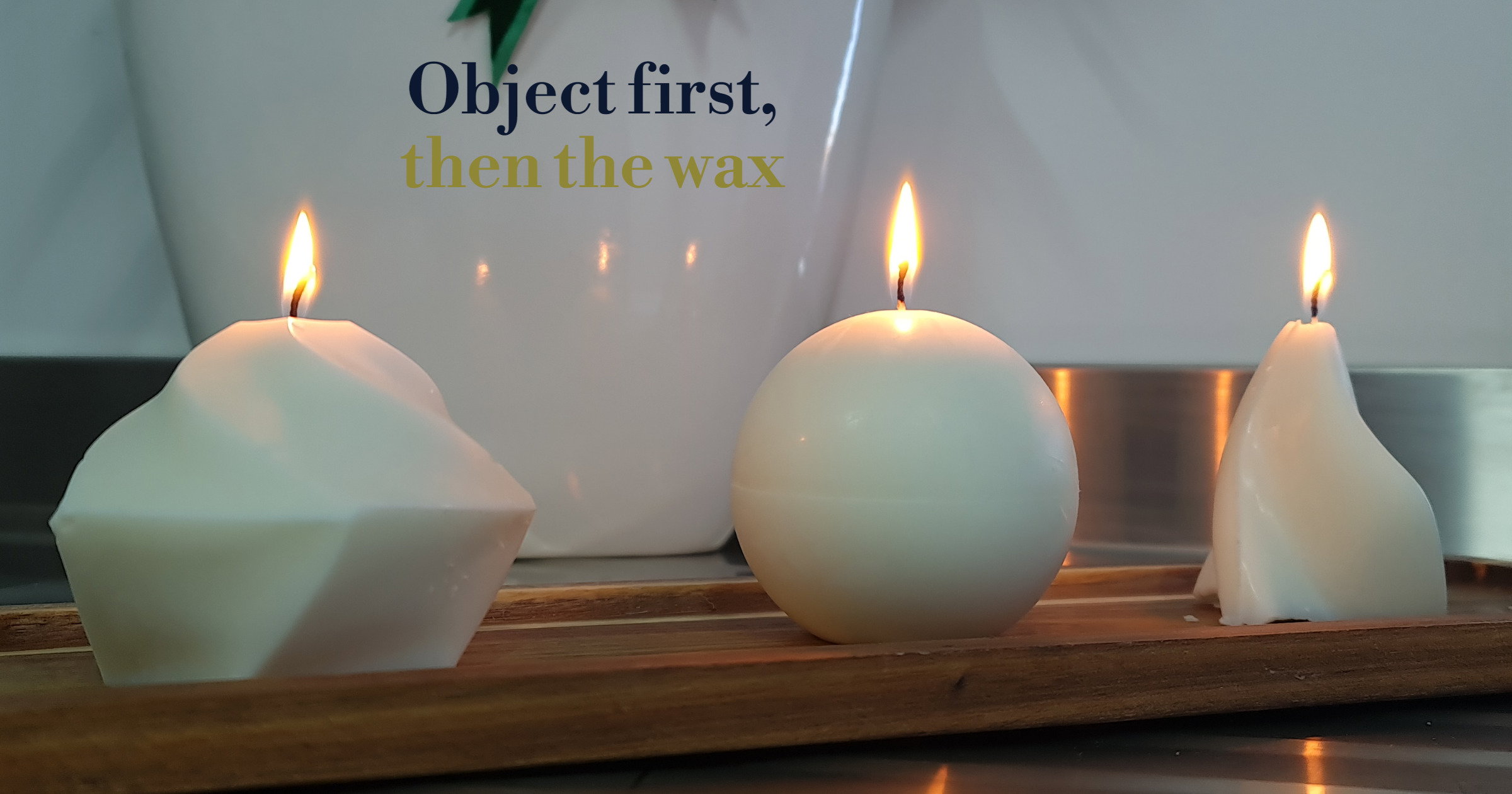
You already know what you want to end up with. A candle that stands on its own on the table, a figurine poured in silicone, a scented jar to give as a present. What you don’t know is which shelf you buy that from, because the shelf is divided by how the wax behaves as it cools, while you’re searching by how the candle looks at the end.
Which candle wax you choose is decided by the object you want to hold in your hand. The object gives you the shape, the shape cuts the catalogue into two shelves, and on the shelf that’s left you have three or four options to choose between, by compromise. The name of the plant family on the bag comes last, after the first question is settled.
The wrong choice doesn’t show on the day you pour. The wax looks fine in the tray, the candle looks fine in the evening, and the problem comes out the next day at demoulding, or after 48 hours, when the manufacturers’ data sheets tell you to do your first burn test. Below is the path from what you want to make to what you put in your basket, with the figure from the data sheet that justifies each row.
I’m Sînziana. We’ve been pouring since 2010, in our workshop in Maramureș, Romania, with the same materials we sell on. The path below is the one we walk through with someone on the phone, when they write to us “it’s my first time” and don’t yet know a single word on the label. Each piece has its own article, written in full. Here they’re put in order, so you don’t have to read them all before you buy a bag.
Which candle wax do you choose if it’s your first order?
You start from the object you want to make and describe it in your own words, with its shape and its container. That alone cuts half the catalogue, before you open a single technical data sheet.
What muddles the path is starting from the wax family, with the answer “I want soy”. Soy is sold on both shelves, in two versions that behave the opposite way from each other. Soy wax for moulds has a typical penetration of 32 and shrinks as it cools, so it comes out of the mould. Soy wax for containers has a typical penetration of 60 and is made to stay stuck to the sides of the glass. The same plant, two opposite behaviours, two shelves.
What do you know about your candle before you know the terms?
You know four things, and all four can be said without technical vocabulary. Written on paper, they’re the complete brief from which someone can answer you on the phone in two minutes.
- The shape. Does it stand on its own on the table, or does it sit in a glass?
- The container. If it’s a glass or a jar, what diameter it has on the inside, measured with a ruler.
- The size. Roughly how tall and how thick.
- The scent. Whether you want it scented or plain.
With those four lines filled in, choosing the wax becomes a single decision instead of a search. If any word on the shelf sounds foreign to you, the terms are translated one by one, with what you look for with each.
What people at their first order write to us
The messages to our support start almost identically, with “it’s my first time”, and go on with an object. “What wax should I use to roll by hand.” “What wax should I use to put plants in a container.” (translated from Romanian) Nobody asks about penetration or congealing point, even though those are exactly the figures that give the answer.
In the interviews with loyal customers in July 2026 the wording stays just as concrete, only it comes after the batch has gone wrong: “the candles break when I take them out of the mould”, “I can’t hit the temperature, a hole at shrinkage”, “soy is softer, they break if I don’t combine it with paraffin” (translated from Romanian). All three describe the object, not the material.
The work of translating from object to bag is something we do on the phone, every time. This article is that same translation, written once, so you can do it yourself on a Sunday evening, when the workshop is closed.
What do you do with the bag of wax that doesn’t suit you?
Usually you move it to the object it was formulated for. A container wax poured into a mould won’t come out, because it’s too soft to hold itself up, but that same wax works in any glass you have around the house, with the right wick for its diameter. A mould wax that pulls away from the sides of the jar is still good for free-standing poured candles, and the data sheet of KeraSoy Pillar 4120 also declares it for wax melts, that is wax melted for scent, without a wick.
What you lose isn’t the bag. You lose the batch poured wrong, the wicks in it, the fragrance put into it and the two days of waiting until the first burn test. That’s why the path is walked before you order, not after the first pour.
What do you put in your basket for each thing you want to make?
Five objects, five paths, and each path has a single correct starting point. The table below is the whole path: the object you want, the shelf you buy from, the wax you start from and the figure that justifies the row, taken from the manufacturer’s data sheet or from the way we pour.
What do you buy for each of the five paths?
You buy the wax from the row that describes your object, plus the wick that suits it. The first four rows are paths we walk ourselves in the workshop, with the temperatures we work at written alongside; the last is a use the manufacturer declares on the data sheet.
| What you want to end up with | The shelf | Where you start | The figure that justifies it |
|---|---|---|---|
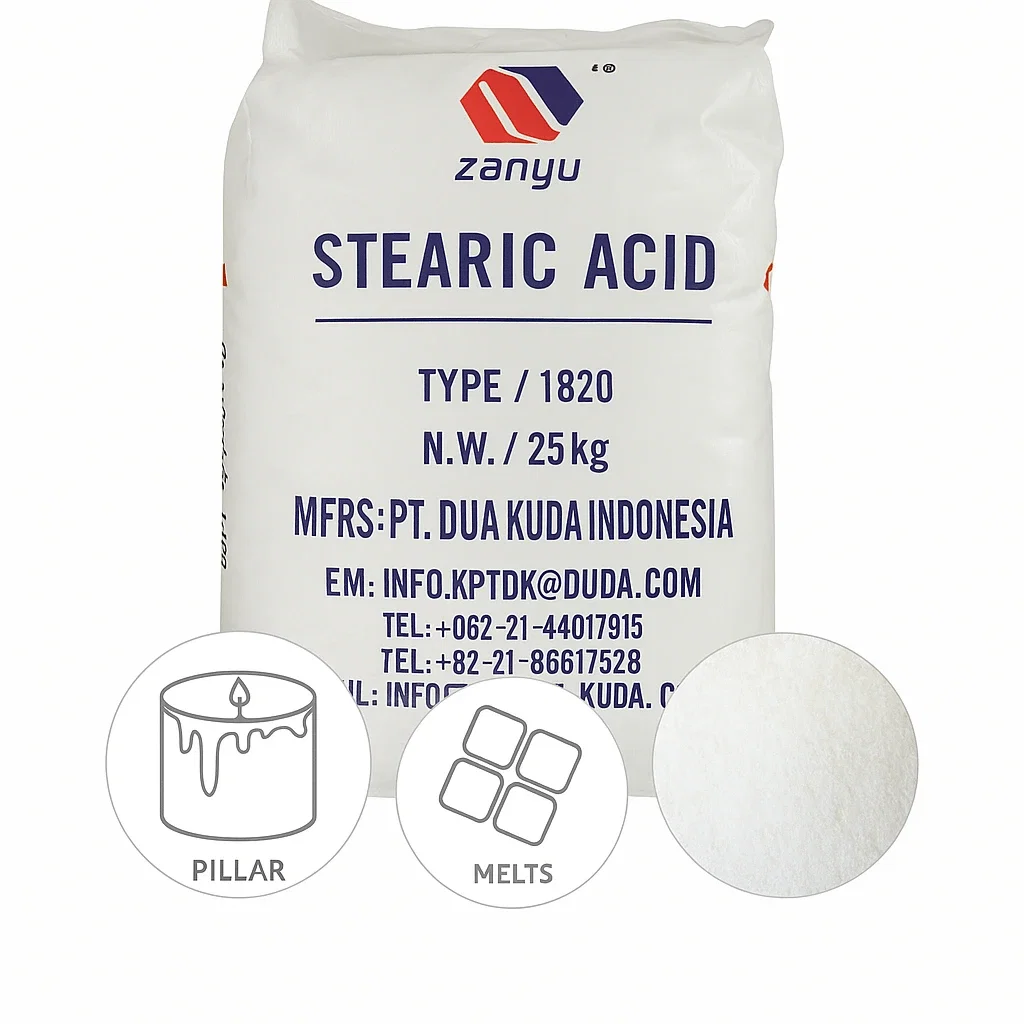
| A candle that stands on its own on the table | moulds | KeraSoy Pillar 4120 | typical penetration 32 dmm, pouring at 55–65 °C |
| A figurine with fine detail, poured in silicone | moulds | KeraSoy Pillar 4120, with SM2000 palm wax in the blend | mould preheated to 40–45 °C, pouring at 58–62 °C (from our workshop) |
| A candle poured in a glass or jar | containers | KeraSoy Container 4130 | typical penetration 60 dmm, pouring at 45–55 °C |
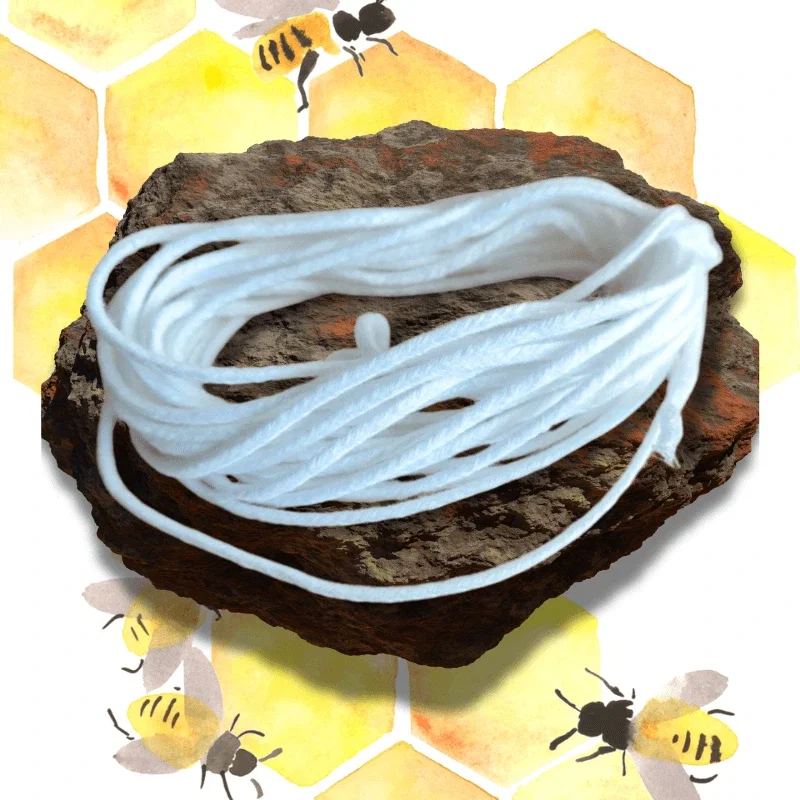
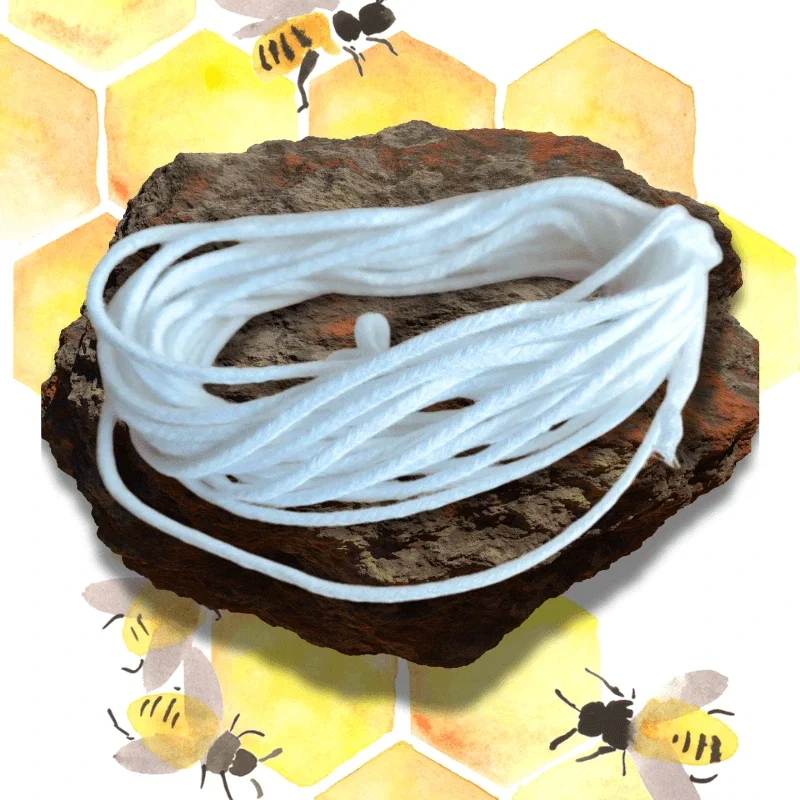
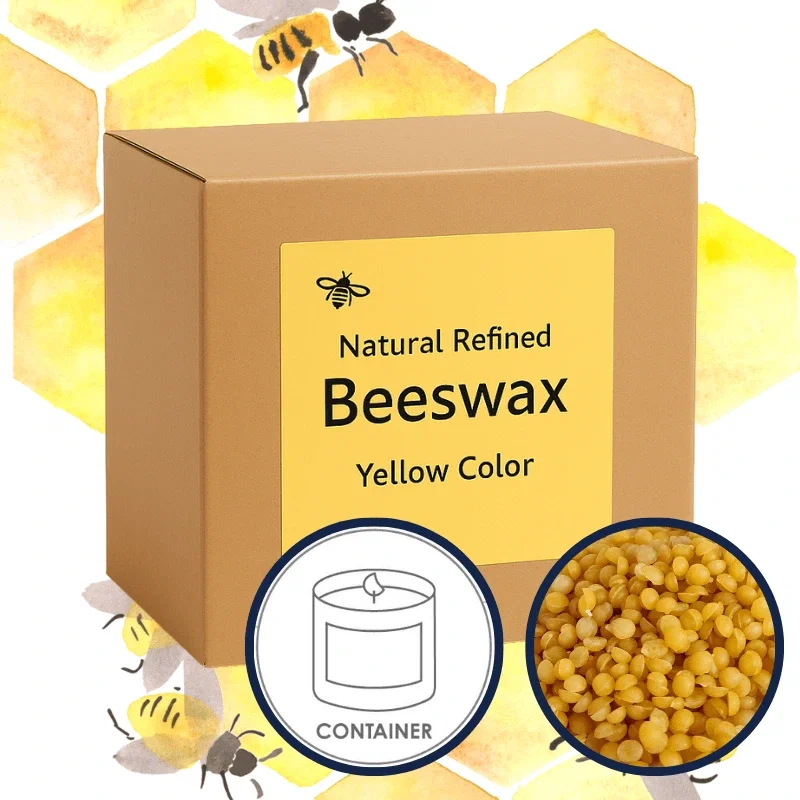
| A candle rolled by hand, without melting | beeswax | honeycomb wax sheet and Special Wick No. 5 | the wick covers Ø 20–40 mm |
| Wax melted for scent, without a wick | moulds | KeraSoy Pillar 4120 | use declared on the Kerax data sheet |
The row you start from isn’t the row you stay on. It’s the point from which you can compare the rest of the shelf, because now you know which figure you’re looking for. If you want a jar with a strong scent, for example, coconut wax for containers lists its throw on the data sheet, that is the strength of the scent cold and while burning, as an argument against soy. It takes about the same amount of fragrance, between 5 and 12 per cent, and the difference is made by the material, not the dose. What each family does and where it gives way, with all nine set side by side, is written separately, in types of candle wax.
What we use in the workshop, on each path
For candles poured in moulds and for figurines we start from KeraSoy Pillar 4120. In our recipe, on its own, it stays softer than we need for large pieces and for silicone figurines, so we add SM2000 palm wax to the blend: a drier surface to the touch and cleaner demoulding than the same recipe without it. That palm wax has its melting point at 56 degrees, so it raises the firmness of the blend. The rest of the recipe resettles around it, so a blend is tested as a new recipe, not as a small correction.
With figurines, the same wax gives different results depending on the temperature you pour at. The range we work in is 58–62 degrees, with the silicone mould preheated to 40–45. Below 55 the wax becomes brittle and the tips break, above 63 the fine details are lost, and if the mould is cold, the shrinkage breaks the wings at demoulding.
For jars we start from KeraSoy Container 4130, poured between 45 and 55 degrees, with the glass preheated. Adhesion to the sides is decided right there: poured too hot, or into a cold glass, it pulls away and leaves white areas on the glass.
How much wax do you need for a small batch?
You count in pieces and convert to kilograms only at the end. The figure we use in our public price calculations is 250 grams for a candle in a glass, so a kilogram means roughly four candles. It’s a reference for the sums, not a filling rule: how much goes into your glass is told by the glass, filled with water and weighed.
- You count the pieces you want to get from your first batch, including the test ones.
- You find out how much goes into one piece. You weigh the container full of water, or use the 250 gram reference if you don’t have the container in your hand yet.
- You add two pieces for the burn test, because those get used up and aren’t sold.
- You round up to the pack size available.
For the soy waxes, the smallest pack in our shop is one kilogram, that is around four candles in a glass. For a first order it’s enough to see how the wax behaves, and if the choice was wrong you’ve lost a kilogram, not a shelf.
What’s left to decide after the wax
Two things are left, in this order: the wick and the fragrance. The container or the mould are already decided, because they’re the very object you started from, and both remaining things are worked out starting from the wax you’ve just chosen.
The check that gets skipped most often is the first one. A wick chosen from a table, without knowing which wax goes around it, is a choice made on half the data.
Why is the wick chosen last?
The wick is sized by two things at once, the diameter of the candle and the wax in it. Natural waxes need a bigger wick than paraffin, in practice one size up from the wick manufacturer’s table. That size is the starting point; the burn test confirms it or moves it.
In concrete terms, for a 6 centimetre jar with soy wax we start from code 60 in our range of waxed wick, and we’re ready to move to 70 if wax stays unburnt on the edges at the first test. For candles rolled from honeycomb wax sheets the line is a different one altogether: Special Wick No. 5 for diameters from 20 to 40 millimetres and Special Wick No. 7 for 50 to 80, both certified for 100 per cent beeswax.
How you choose the size from the start, with the whole table and the test that confirms it, is written in the wick guide for container candles.
How much fragrance goes into the wax you’ve chosen?
The ceiling is set by two documents at once: the wax’s data sheet says how much the wax can hold, and the fragrance’s IFRA certificate says how much you’re allowed to put in your product category. You keep to the lower of the two, and your recipe may call for even less. Above the ceiling the fragrance comes out of the wax, greasy spots appear on the surface, and the burn becomes unstable. The difference between how much you’re allowed and how much your system can carry is written in full in IFRA fragrances for candles.
| The wax | How much fragrance it carries |
|---|---|
| KeraSoy Pillar 4120 | 5 to 10 per cent |
| KeraSoy Container 4130 | 10 to 12 per cent |
| Coconut for containers | 5 to 12 per cent |
For figurines, in our recipe, we go below the minimum on the data sheet, to 4 to 6 per cent, because heavy fragrances make the wax brittle and the tips break at demoulding. A weak scent while burning isn’t fixed by putting in more, above the limit, and the whole mechanism, with the drop test on a teaspoon, is in why your candle has no scent when it burns.
What isn’t fixed by changing the wax
Many of the faults from your first pour aren’t solved by changing the bag, because they come from the wick or from cooling. It’s worth checking what exactly went wrong before you blame the material.
A candle that burns down the middle and leaves wax on the edges has an undersized wick. The white spots on plant wax come from uneven cooling and are called frosting, and that crystallisation belongs to plant wax itself, not to the brand on the bag. They don’t all behave the same: the data sheet of sunflower wax, for instance, declares it absent. The hollow next to the wick is shrinkage as it cools, and it’s fixed with two holes next to the wick, not one. The crack from the centre to the edge is cracking, and it comes from pouring too hot or cooling too suddenly.
There’s also the opposite case, where the wax really is the cause, but you still don’t change the family. When the same recipe stops working with a new bag, the variable is the batch, and its certificate of analysis tells you by how much it has moved.
What you start with tomorrow
You start with a single written sentence, not with an order. That sentence is the object, and everything else, the wax included, follows from it.
What’s the first thing you decide?
You decide the object and write it down in one line, with the shape, the container and the size. “Candles in 6 centimetre glass jars, scented, about twenty pieces.” That’s enough to get the shelf, the wax, the starting wick and the quantity.
If it’s your first pour and you want a recipe taken all the way, your first soy wax candle follows a single combination. If you’d rather not melt anything, the first candle from honeycomb wax sheets is made in 98 seconds, timed. And if you don’t want to choose piece by piece, in our kits the things that go together are already put together.
Where each piece of the decision is written
Each step of the path above has its own article, written in full. The list below is the order to read them in, if you want to go through them all.
- The shape and the shelf are in mould wax or container wax, how to choose.
- The wax family and its limit are in types of candle wax.
- The words on the label are in candle-making terms.
- What “eco” means on a bag is in what eco wax means.
- The temperatures and the pots, with the hob on, are in candle pouring safety at home.
- If the candles are for a wedding, the calendar is in when to order wedding candles, and what you need to make them yourself, in how to make wedding candles at home.
Read in this order, the articles above are an afternoon. Read after the first wrong order, they’re the same afternoon plus a batch thrown away.
The question “which is the best wax” has no answer, because each wax is the best for a particular object and gives way on another. The question “what do I want to end up with” has an answer every time, and it’s the only one that can be asked before you know anything about materials.
It’s also the check you can run on any supplier, us included. If they recommend a wax before asking what you’re pouring, they’re answering from their stock. If they first ask what you want to end up with, you have in front of you someone who works with the material, not just with the shelf.
Send us that sentence with your object, on WhatsApp or by phone, at +40 726 162 810 (we answer in English), Monday to Friday, between 8:00 and 16:30 (Romanian time). We’ll tell you which shelf you start from and with which wax, before you buy the bag.